Telehealth Website Design and Development Company

Our Telemedicine Website Developers

Topflight Apps is a telemedicine website development company. We design and build telehealth websites for healthcare providers, clinics, and digital health companies: patient portals, appointment scheduling, virtual visits, digital intake flows, EHR integrations, and admin tools, all running on HIPAA-compliant architecture.

We’ve been crafting telehealth web solutions, such as teledermatology platforms and patient portals, since long before virtual care went mainstream.

We also had a head start with artificial intelligence, IoT integrations, and machine learning in telehealth applications.

If you’re looking to build a telemedicine website that pulls its weight from day one, we’re happy to offer our decades’ worth of experience in healthcare web app design and development.

Patient with a telenursing app

Our Healthcare Clients

cedars sinai
cleveland clinic
stanford medicine
merck
medable

Telehealth Website Development Services We Offer

Our telehealth website development services cover the full build, from the first discovery workshop to post-launch support. Here’s what we take off your plate.

Product Strategy and UX Discovery

We map your users and the workflows the site must support, then scope a feature set against your budget. You walk away with a build sequence where the first release already earns its keep.

UX/UI Design for Patients and Providers

UX and UI deserve special attention when building a telemedicine website. Telemedicine website design has to adapt to patients and medical staff alike, down to fine detail like keeping video off by default for camera-shy patients or virtual backgrounds for doctors. Our telehealth website design services cater to both audiences.

Patient Portal and Appointment Scheduling

We build patient portals where people book and reschedule visits, fill out forms, check visit summaries, and message their care team without phone tag. Secure messaging and automated reminders cut no-shows and keep patient engagement alive between appointments.

Video Visits and Virtual Waiting Room

HD video conferencing with a virtual waiting room, in-visit notes, and screen sharing, built for everything from telepsychiatry to post-op follow-ups. Patients join virtual consultations straight from the browser, no app install required.

EHR/EMR, Billing, eSignature, and Device Integrations

We connect telemedicine websites to electronic health record systems so clinicians edit patient data once, with no double entry. Same goes for e-signature, patient scheduling, and billing integration. And when your solution needs readings from a medical device, we handle the IoT side too.

Admin Dashboards, Reporting, and Ongoing Support

An admin portal is the most commonly overlooked piece in telemedicine website design services. We build one where managers fine-tune the site’s settings and pull reports on e-visits, no-shows, and cancellations, then stay on after launch to keep it all running.

What Makes Telehealth Websites Work in Practice

Five fundamentals decide whether a telehealth site holds up after launch. We bake them into our telemedicine website development services from day one.

HIPAA-Compliant Architecture and Secure Data Handling

Encryption at rest and in transit, data anonymization, role-based access controls: that’s the floor for any build that touches protected health information. We protect patient data to HITECH and GDPR standards as well, and document the architecture so an audit doesn’t turn into archaeology.

Responsive, Accessible Experience Across Devices

You want your telemedicine portal available to as broad an audience as possible. We build responsive layouts that work the same on a phone in a parking lot and a desktop at the front desk, with accessibility for older patients and screen-reader users baked in.

Low-Latency Video and Reliable Performance

Low latency keeps doctors and patients from talking over each other on a video call. Topflight telehealth site developers integrate tools like Agora SDK or build a custom WebRTC solution so your telemedicine website stays usable even on slow connections.

Intuitive Patient Flows That Reduce Drop-Off

Every extra screen between “I need a visit” and “visit booked” loses patients. We trim intake to what’s needed for that appointment type and pre-fill what the system already knows. Fewer fields, fewer drop-offs.

Scalable Infrastructure for Growth

A telehealth platform that works for 200 patients can fall over at 20,000. We size the cloud setup, queues, and video capacity for where you’re headed, so a busy flu season is just a good month.

Advanced Telehealth Workflows We Can Build

Asynchronous Screening and Digital Intake

We can upgrade your existing telemedicine website with an asynchronous screening tool or build one into a brand-new site: a questionnaire, a form, or a chatbot sitting on your front lines.

These tools collect health data before a human ever picks up, which takes real load off overwhelmed front offices and call centers.

As a leading telehealth website development firm, we’ve built quite a few screening tools, including fully asynchronous ones.

An example of a telemedicine app for a cardio practice

Medical Assistant Workspace

A separate module for medical assistants has become one of the bigger trends in telemedicine website development. The assistant gets their own UI to join a teleconsultation, update the patient’s data in the EHR, and document the visit.

It also clears the hurdle of doctors managing the technical side of consultations, like monitoring connection quality. Our telemedicine website developers will gladly build such a module for your practice.

Remote Patient Monitoring and IoT Integrations

We connect telehealth websites to blood pressure cuffs, glucometers, scales, and wearables so readings land in the provider’s dashboard between visits. Thresholds trigger alerts, and clinicians see the trend instead of a single number at the annual checkup.

AI-Powered Triage or Support Features

An AI layer can route patients before staff get involved: symptom triage that points someone to the right visit type, or a support bot that answers portal questions. We scope these carefully, because in healthcare a wrong answer costs more than a slow one.

Take your idea from vision to traction with Topflight

Why Choose Topflight as Your Telemedicine Website Development Company

Deep Healthcare Product Experience

Healthcare is our core market: 10+ years of building for providers and digital health startups, with hundreds of HIPAA-bounded projects behind us. Picking a telehealth website development company that lives in this niche means the vendor isn’t learning what a superbill is on your dime.

Strong EHR/EMR Interoperability Expertise

We’ve shipped dozens of EHR integrations over FHIR and HL7, including the fun parts: sandbox timeouts, scope approvals, and field mappings two systems name differently. That experience shows up as realistic timelines instead of surprises in month 4.

Product-Led Delivery With Healthcare UX Focus

We push for working prototypes over 60-page scope docs. Decisions get made against something clickable, and designs get tested with patients and healthcare professionals before a sprint goes into building the wrong thing.

Cross-Functional Team for Strategy, Design, and Engineering

Strategy, design, and engineering sit on one team here rather than in separate departments passing tickets. When a design choice has a compliance cost, you hear about it the same week, from the people who’ll build it.

Selected Projects by Our Telehealth Website Developers

Here’s a sample of what our telehealth website developers have shipped.

AlgoRx Prescription Platform

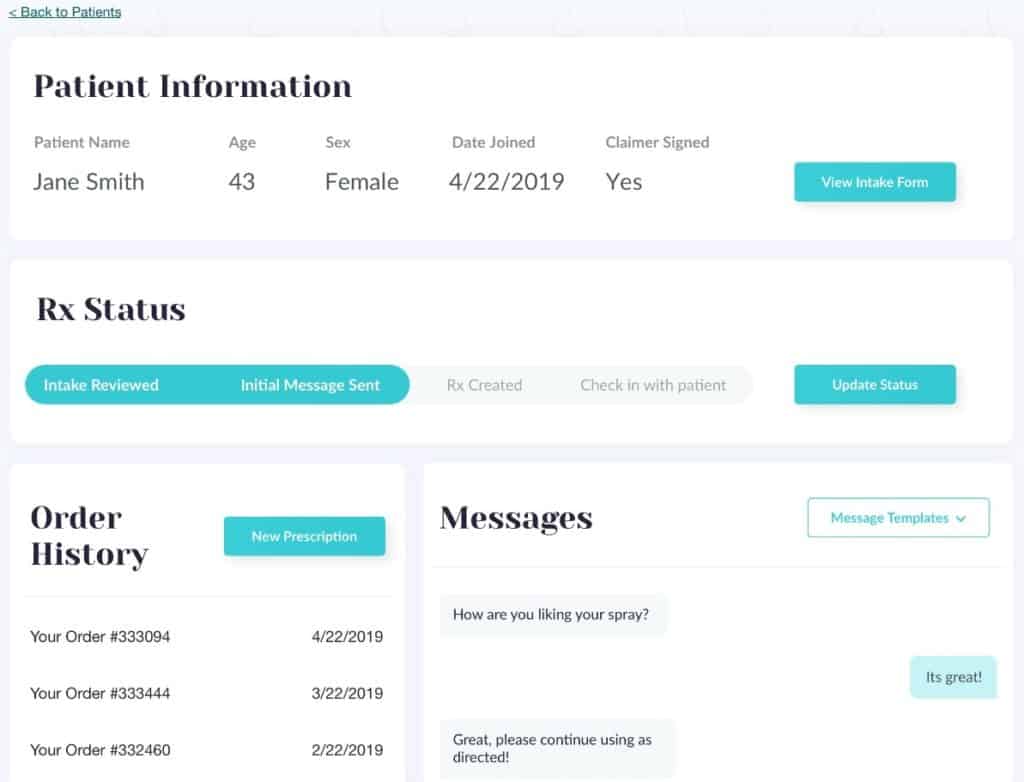
A prescription e-commerce platform where patients select, qualify for, and purchase non-controlled medications in a few clicks. We built the eligibility questionnaire with branching logic, automated provider approvals with pre-filled SOAP notes, a patient portal with order tracking and secure messaging, and the admin pane behind it, all on HIPAA-compliant rails.

Read the AlgoRx case study.

Telehealth Platform, San Francisco, CA

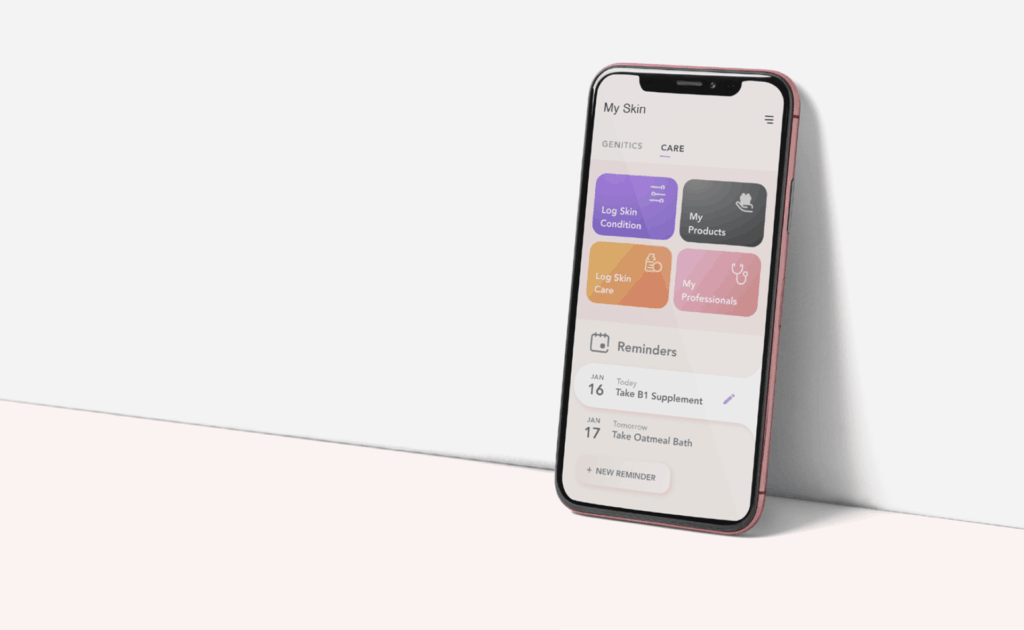
A web-based, mobile-responsive app where patients track daily symptoms, medications, and diet, with everything feeding a dashboard for analysis. We took it from product discovery and UX/UI design through React Native development. The client rated the engagement 5.0 on Clutch.

“The team was well-rounded and had strong problem-solving skills.”

Telehealth Platform, Burton, MI

iOS and Android apps we designed and shipped to the App Store and Google Play, on AWS with RevenueCat handling subscriptions. The founder’s verdict on Clutch:

“The team was open, communicative, and worked diligently.”

Request a proposal

Although it would be great to start a project having every step completely mapped out, it’s rarely realistic. That’s why we have a process to start lean, iterate fast, and adapt to unexpected challenges to find and maintain market traction.

Telehealth Website Development Process in our Company

pharmacy app development

Discovery and Solution Planning

Before building a telemedicine site, we make sure the telehealth app we’re developing helps you hit your business goals. We draft a rough mockup as a visual guide, evaluate tech stack options, and advise on what holds up long-term. We also check available SDKs, APIs, and third-party libraries, and discuss whether there’s a compelling use case for artificial intelligence in your telehealth website.

Deliverables: specifications, range estimates.

UX/UI Design and Prototyping

While many agencies jump straight to development, our telemedicine website design company starts with rapid prototyping. The prototype is a draft of your telemedicine website, foundation and minimum carpentry, yet it lets us iterate on the feature set while developers flag bottlenecks and tech stack limits. Once the UX is carved out, UI designers take over the fonts, animations, buttons, and page styling that make the site worth engaging with.

Deliverables: clickable prototype, design sources, animations.

prototyping pharmacy app
designing pharmacy app

Development and Integrations

At this step, we bring together everything built so far. Our telemedicine website developers, led by a product manager, code the web app in two-week Agile sprints, wiring up EHR, billing, e-signature, and other integrations along the way. Each sprint ends with a demo and a check-in, so you always know where the project stands.

Deliverables: website code, the site’s beta version.

QA, Security, and Launch

We program unit tests to check new code automatically and run beta testing with your end users. Before going live, we sweep for typos, empty links, branding compliance, responsiveness, and loading speed, plus a security review of how the site handles PHI. Then we launch your telemedicine website to the public.

Deliverables: source code, production-ready site.

coding pharmacy app development
testing e-pharmacy app

Post-Launch Support and Optimization

After launch, you get the live site along with its code archive and a backup version. And because the web keeps changing, many clients keep us on as their telemedicine site development agency: we fix issues, lift engagement with micro-interactions, build features from the roadmap, and keep the server ahead of growing traffic.

Deliverables: maintenance plan, feature roadmap updates.

Request a proposal

FAQ

How much does a telehealth website cost?

A telehealth website MVP typically runs $20,000 to $40,000 and covers a patient portal, scheduling, video visits, and basic admin tools. Custom EHR work, remote patient monitoring, or AI features push the number up. We scope against your exact feature list, so you see the range before any contract.

How long does telemedicine website development take?

Around 2 to 3 months for an MVP. Complex EHR integrations or custom clinical workflows stretch that, and we’ll tell you by how much during discovery, before the build starts.

Can you integrate with Epic, Cerner, or other EHRs?

Yes. We’ve integrated telehealth solutions with Epic, Oracle Health (Cerner), athenahealth, and other systems over FHIR and HL7 APIs. EHR integration scope is usually the first thing we pin down, since it drives both timeline and budget.

Do you build HIPAA-compliant telehealth websites?

Every healthcare build we ship is HIPAA-compliant: encrypted PHI at rest and in transit, role-based access, audit logs, and BAAs with every vendor in the chain. HIPAA compliance is the floor here, and we document the architecture so you can prove it to an auditor or a partner.

Can you modernize an existing telehealth website?

Yes, and it’s often cheaper than a rebuild. We audit the current site, then redesign the UX, replace brittle integrations, add features like asynchronous intake or patient records management, or re-platform if the foundation can’t carry your roadmap. That works whether you run a healthcare practice or a digital health product.