

RHTP-style funding creates a rare moment in healthcare: money shows up with a deadline attached, and suddenly “we’ll get to interoperability later” becomes a great way to lose the award and your sanity. CMS structured the Rural Health Transformation Program as $50B over five fiscal years, with $10B available each year from FY2026–FY2030.
The mistake ops teams make in these cycles is chasing “platforms” and “AI strategies” when what you actually need is a deployable package that survives real clinic constraints—thin staffing, high patient complexity, and zero tolerance for tools that add clicks.
This playbook is about shipping the boring-but-valuable stuff fast: HIE-first integration instead of big-bang EHR projects, a security baseline that doesn’t derail procurement, and AI used as a workflow accelerator (triage, routing, documentation support), not a clinician cosplay. By the end, you’ll have a procurement-ready checklist and a phased rollout plan that fits 2026–2027 reality.
| Quick question: If you’re a rural hospital ops leader staring at RHTP-funded “transformation,” what’s the fastest path to something real—not another pilot nobody uses?
Quick answer: Treat 2026–2027 as a deployment window, not an innovation contest. Prioritize workflows that reduce operational load (RPM, access, chronic care), ship integration the pragmatic way (HIE-first where possible), and lock a security baseline early so procurement doesn’t stall. Use AI to compress work (intake, routing, documentation support), not to impersonate clinicians. |
Key Takeaways
- Fund one program you can operationalize with existing staffing, then expand only after you can show weekly execution (enroll → monitor → escalate → resolve).
- Ask every vendor for the same two artifacts: a 90-day go-live plan with named workflow owners, and a one-page “what data moves on day one” diagram.
- Your biggest failure mode isn’t choosing the wrong tech — it’s buying something that can’t survive week-two operations (alert fatigue, unclear ownership, double documentation).
Table of Contents
- What RHTP Changes for Rural Ops Teams
- What States Will Actually Fund (Translated Into “What You Can Buy and Run”)
- The Non-Negotiables: Interoperability and Guardrails
- The Build-Fast Strategy: Package First, Customize Second
- The “RHTP-Ready” Shortlist (What to Procure in 2026)
- Integration Without a Multi-Year EHR Project
- A Three-Phase Delivery Plan (So You Hit 2027 Without Burning Out Staff)
- The “This Quarter” Procurement Checklist (So You Don’t Buy Another Shelfware Platform)
What RHTP Changes for Rural Ops Teams
RHTP compresses the usual “plan → pilot → maybe scale” timeline into a single question: what can you deploy and sustain before the window closes?
The Operating Constraint: Timelines and Deliverables (Not “Innovation”)
This funding cycle isn’t rewarding clever roadmaps. It’s rewarding go-lives. The practical implication is simple: you have a limited runway to turn funding into working workflows—then show they’re being used, because CMS ties RHTP funding to defined program goals and state-led implementation commitments.
That changes how you should evaluate projects and vendors. The question isn’t “Is this the perfect long-term platform?” It’s “What can be implemented quickly, adopted by staff, and measured without torching IT capacity?”
When timelines are tight, your biggest risk isn’t picking the “wrong” technology. It’s picking something that can’t cross the finish line because it requires too many dependencies: deep EHR work up front, major change management, or a security review that drags on for months.
The Spending Pattern: Platforms Lose, Packaged Deployments Win
In rural environments, broad platforms often stall—not because they’re bad, but because they assume you can rewire operations before you see value. Under deadline pressure, teams tend to succeed with deployable packages: focused solutions that map to real operational programs and produce results quickly.
Think in terms of “packages you can run,” not “platforms you can configure”:
- Remote monitoring with escalation workflows (who responds, how fast, where documentation lives)
- Access workflows that reduce phone tag (front door, triage, escalation paths)
- Cybersecurity and infrastructure upgrades that clear procurement and reduce risk
- Data-sharing that supports care coordination without a multi-year rebuild
A package is easier to approve, implement, train on, and measure—especially when staffing is thin and operational tolerance for disruption is near zero.
If you’re weighing vendors vs custom delivery, use this buy vs build decision framework to keep the math honest.
The Success Metric: Go-Live Adoption, Not Pilot Slide Decks
In this cycle, a pilot that “proves concept” but never becomes routine work is a costly distraction. The bar is whether your clinicians and care teams actually use the workflow and whether it reduces load or improves throughput without creating new bottlenecks.
That’s why the “Build Fast + Integrate” strategy matters:
- Start with operational value first (a workflow people will use in 30–90 days).
- Integrate pragmatically (share data through the least-friction path first, deepen later).
- Lock a security baseline early, so the project doesn’t die in procurement.
The common failure mode is trying to do everything at once: big-bang EHR integration, full-feature platform rollout, and ambitious AI on top. A phased approach—value first, integration second, expansion third—keeps you moving while the funding window is still open.
What States Will Actually Fund (Translated Into “What You Can Buy And Run”)
The easiest way to waste this cycle is to buy “capabilities.” The smarter move is to fund deployable programs with clear owners, clear workflows, and outcomes you can measure without extra reporting overhead.
Remote Monitoring And Chronic Programs That Reduce Avoidable Utilization
States are explicitly prioritizing remote patient monitoring plus care coordination and chronic disease management tools. The winning interpretation for ops leaders is simple: don’t procure “an RPM platform.” Procure an RPM program-in-a-box that answers day-one questions:
- Who enrolls patients, and when (discharge, clinic visit, outreach)?
- Which conditions first, and what “good” looks like?
- What happens when thresholds are crossed (who’s alerted, response time, escalation path)?
- Where documentation lives so services can be proven and audited.
If you’re choosing between more features and cleaner workflows, take the boring option. In tight timelines, operational simplicity beats feature density.
Telehealth And Access That Doesn’t Increase Staff Load
The procurement-ready framing is: access model, not “video visits.” If you’re evaluating the build path, our telehealth app development guide covers the practical steps and constraints.
A strong “buy and run” package typically includes:
- A single front door for patients (phone + web/app) that reduces phone tag
- A triage workflow that compresses staff time (intake → routing → escalation) instead of creating a parallel system
- A clear human escalation path (nurse first, clinician when needed), because access without escalation is just a queue with better branding
AI belongs here only as a workflow accelerator: collect context, route, and summarize—then let humans decide and sign off. If you’re adding automation to intake and routing, start with AI triage guardrails before anything patient-facing.
Cybersecurity And Infrastructure Upgrades With Measurable Risk Reduction
Cybersecurity is explicitly prioritized, and it’s easy to waste money on checkbox spending. The high-leverage version is security that reduces procurement friction and operational risk:
- A baseline posture vendors can pass without months of back-and-forth
- Practical controls around identity, access, audit logging, and incident response readiness
- A roadmap that doesn’t assume a full rebuild
Start with what unblocks everything else: vendor due diligence readiness, BAAs where applicable, and a baseline that won’t derail go-live later.
“AI And Advanced Tech” As Workflow Compression (Not Clinician Replacement)
AI will sink a lot of funded projects because “AI strategy” is an easy pitch and a hard go-live. The version that survives rural reality is workflow compression:
- Intake that captures context once
- Routing that gets patients to the right resource faster
- Summaries and documentation support that reduce after-hours charting
- Preventive outreach that’s targeted, not spammy
Rule of thumb: if AI requires blind trust, it won’t be adopted. If it makes staff faster while they stay in control, it has a chance. The meta-point across all four buckets: RHTP-era buying favors implemented programs—not software you “hope to configure later.”
The Non-Negotiables: Interoperability and Guardrails
If you don’t bake interoperability and safety constraints into the plan up front, they won’t politely wait until “Phase 2”—they’ll show up as delays, rework, or procurement stalls.

Interoperability Reality: HIE-First Versus Direct EHR Integration
When people say “EHR integration,” they often mean three different things:
- Share the right data outward (so other providers can see it).
- Pull the right data inward (so your teams have context).
- Close the loop operationally (so a workflow actually changes what staff do).
The trap is assuming the only “real” integration is a deep, direct connector into every EHR you touch. In rural ecosystems—multiple affiliates, referral partners, clinics, and varying EHR footprints—that approach can turn into a timeline killer.
Interoperability pressure is also being reinforced by state-level exchange requirements like California’s Data Exchange Framework, which set implementation deadlines for certain participants (including the Jan 31, 2026 milestone for some entities).
A more pragmatic path is often HIE-first (or exchange-first): integrate once with an exchange layer where feasible, then add selective direct EHR work only where it’s unavoidable.
This aligns with the “build fast + integrate” goal: you want coverage and operational usefulness quickly, not perfect bidirectional integration everywhere on day one.
The Minimum Viable Data Flow You Need By 2027
A fast implementation still needs a clear “minimum viable data flow”—otherwise you end up with a tool that technically works but operationally floats in space.
A practical minimum viable flow for the kinds of programs states are prioritizing (RPM, telehealth, chronic care, preventive outreach, data-driven care closer to home) looks like this:
- Identity And Matching: enough demographic/identity hygiene to prevent duplicate records and misrouted information.
- Clinical Snapshot In: the essentials that staff need to act safely (meds/allergies/problem list, or a constrained subset appropriate to your workflow).
- Program Output Out: the artifacts your program creates—RPM readings and trends, summaries, care plan updates, discharge follow-ups—shared through the most viable channel first.
- Auditability: the ability to show what happened, when, and by whom (operationally useful and procurement-friendly).
- Escalation Hooks: flags that trigger the “human system” (nurse triage, clinician escalation), not just a notification that disappears into a void.
Think of it as: pull enough to act, push enough to coordinate. Everything beyond that is optional until the workflow is adopted.
AI Guardrails: Disclosures, Escalation, and Human-In-The-Loop as a Safety System
States explicitly prioritize AI and advanced technologies, but the fastest way to blow up adoption is letting AI present itself like an autonomous clinician—especially as laws like California’s AB 489 push healthcare AI toward clearer disclosures and practical paths to human support.
Ops leaders should demand guardrails that are operational, not theoretical:
- Disclosure: patients should understand when they’re interacting with automation and what it can/can’t do. (This is as much about trust as it is about compliance.)
- Escalation Path: every “AI front door” needs a clear path to a human—ideally tiered (front-line staff first, clinician when necessary).
- Human-In-The-Loop By Design: not as an afterthought. The safest, most adoptable pattern is AI that collects context, routes, summarizes, and drafts, while humans decide and sign off.
- Scope Control: AI should operate inside narrow workflows with clear boundaries (intake for chronic programs, triage routing, documentation support), not roam freely across clinical judgment.
Here’s the practical test: if the AI output could cause harm without a human checkpoint, your design is wrong for this cycle. The goal isn’t “more AI.” It’s less wasted work—with staff still in control.
Net-net: treat interoperability and guardrails like foundations. You can build a fast house on a good foundation. You can’t build a fast house on quicksand.
The Build-Fast Strategy: Package First, Customize Second
Speed comes from reducing dependencies and making the first release a real operational program—not a configurable sandbox that needs months of “alignment” before anyone uses it.
“If it can’t ship in 90 days, it’s not a transformation plan — it’s a future excuse.”
Joe Tuan
CEO & Founder, Topflight
The 80/20 Build: Workflows That Deliver Outcomes Fast
In a 2026–2027 deployment cycle, your MVP shouldn’t be “minimum viable product.” It should be a minimum viable program: a workflow that can run with real staff, real patients, and real constraints.
A useful 80/20 build typically looks like this:
- One priority cohort (e.g., uncontrolled hypertension, CHF readmissions, diabetes A1c follow-up) with a tight enrollment rule
- One primary workflow (RPM + outreach, or access + triage + escalation), end-to-end
- One accountability model (who owns daily monitoring, who handles escalation, who documents)
- One reporting loop that proves the program is active and improving something (follow-up completion, time-to-response, avoidable utilization, no-shows)
Why Generic SaaS Fails In Rural Settings (And What Replaces It)
Generic SaaS often fails in rural environments because it assumes spare capacity to learn, maintain, and continuously tune the tool. Rural ops rarely has that.
What replaces it isn’t “custom everything.” It’s a packaged deployment approach:
- Start with a proven workflow design (roles, escalation, documentation)
- Use configurable components where it helps (templates, routing rules, notifications)
- Customize only what’s necessary to match local operations and compliance requirements
Think of it like installing a generator before you remodel the whole building: you’re buying reliability first, then refining.
How To Scope The MVP So Clinicians Don’t Revolt By Week Two
Clinicians and staff don’t resist technology—they resist extra work disguised as progress. Keep scope anchored to friction removal:
- Design for the lowest-staffed day, not the best-staffed day
- Make escalation explicit (who gets alerted, how fast, what the next action is)
- Avoid deep EHR integration first unless it’s required for safety; start with exchange/HIE-first where viable and deepen later
- Lock the security baseline early so procurement doesn’t derail the timeline
- Keep AI constrained: intake, routing, summaries—plus human review for decisions and patient-facing guidance
A good MVP removes work. A bad MVP adds another place to click.
The “RHTP-Ready” Shortlist (What to Procure in 2026)
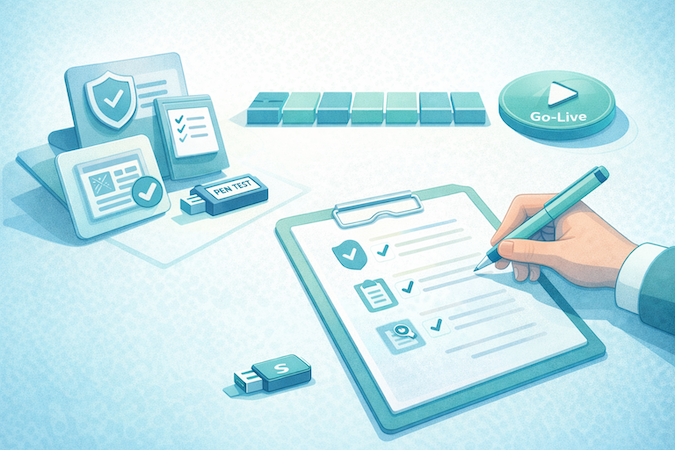
This shortlist is meant to help you buy what can go live quickly, survive staffing constraints, and still satisfy the interoperability and security expectations that show up in procurement.
RPM That Works Operationally: Onboarding, Alerts, Follow-Ups, and Audit Trails
RPM is easy to “buy” and surprisingly hard to operate. The difference between a program that reduces avoidable utilization and one that creates noise is almost always workflow design.
For a step-by-step build view, see our guide to remote patient monitoring app development.
When evaluating RPM, look past device compatibility and ask:
- Enrollment Mechanics: How quickly can staff enroll a patient? Can it be done during discharge or a clinic visit without adding a 15-minute burden?
- Signal Vs. Noise: Can alerts be tuned by cohort and risk level, or will you drown your team in false positives?
- Escalation Flow: When readings cross thresholds, what happens next—automatically and operationally? Who owns the first response?
- Follow-Up Tracking: Does the system track outreach attempts and outcomes, or does this fall back to manual notes?
- Audit Trail: Can you prove services were delivered (who reviewed, when, what action was taken)? This matters for compliance and for reimbursement integrity.
Procurement tip: require vendors to show the full “patient-to-action” flow in a demo, not just dashboards. If they can’t show the escalation and documentation path clearly, you’re buying a data viewer, not a care program.
A 24/7 Access Model: AI Front Door, Nurse Triage, Clinician Escalation
“24/7 access” is often sold as a telehealth feature. Operationally, it’s a coverage model. And the model that scales in rural settings usually looks like a tiered funnel:
- Front Door (Digital + Phone): capture the reason for contact and basic context without forcing staff to repeat questions.
- Triage (Clinical Support): nurses or trained clinical staff handle the bulk of routing and low-risk issues.
- Clinician Escalation: providers get pulled in for cases that truly require clinical judgment.
AI can help here—but only in the roles that reduce workload without increasing risk:
- collecting structured intake,
- routing to the right queue,
- summarizing the interaction for staff,
- drafting follow-up instructions that a human reviews.
What you don’t want is an “AI clinician” experience that creates liability and erodes trust. If a patient can’t easily tell when they’re interacting with automation—or can’t easily reach a human—you’ll see adoption problems fast.
Documentation and Billing Readiness (Don’t Build a Beautiful Compliance Disaster)
Many programs fail not because care wasn’t delivered, but because it wasn’t documented in a way that survives auditing, billing review, or internal compliance.
Your “RHTP-ready” baseline should include:
- Structured documentation templates aligned to your program workflows (RPM reviews, outreach notes, triage actions).
- Role-based accountability (who documents what, and when).
- A defensible record of actions taken (not just “data collected”).
- Exportable reporting for internal oversight and external requirements.
If you’re choosing between a slick patient experience and solid program documentation, don’t be heroic—choose documentation. You can improve UX later. You can’t retroactively invent an audit trail.
Security Baseline Expectations: BAAs, Pen Tests, and Vendor Due Diligence
The fastest way to lose months is treating security as a finishing step. In a deadline-driven cycle, security needs to be a go-live enabler:
- Clear responsibility mapping: what the vendor covers vs what you must cover internally.
- Vendor due diligence readiness: evidence packages, security questionnaires, and documented controls that reduce back-and-forth.
- Pen test and remediation planning: not “we’ll do it later,” but what gets tested, when, and how fixes are handled.
- Access and logging basics: strong identity controls and audit logs that satisfy real-world investigations, not theoretical checklists.
Procurement tip: ask vendors for the “security packet” up front. If it’s thin, slow, or evasive, assume your timeline will slip.
Bottom line: the 2026 shortlist isn’t about buying the most technology. It’s about buying the few things that can reliably go live, integrate pragmatically, and hold up under staffing and compliance pressure.
Integration Without a Multi-Year EHR Project
The fastest path to “integrated enough” is usually staged: exchange-first where viable, selective deep integrations where necessary, and a clear definition of what data actually needs to move.
If you want a deeper technical and operational breakdown, see our guide to AI-powered interoperability.
Ship Outputs To Exchange First; Pull Only What’s Essential
A common integration mistake is trying to replicate the entire EHR inside a new tool. That’s a multi-year project—and it’s rarely necessary to get operational value.
For most RHTP-aligned programs (RPM, chronic care, access/triage, preventive outreach), the first integration win is typically:
- Push the outputs that other providers need to see (summaries, care plan updates, monitoring trends, follow-up status).
- Pull a constrained clinical snapshot that gives staff context to act safely (not everything, just what the workflow requires).
- Keep identity and auditability tight so data is reliable and traceable.
This “output-first” approach also reduces change management: your teams continue doing core charting where they already do it, while the new program layer produces shareable artifacts and operational signals.
Where Direct EHR Integration Pays Off (and Where It’s a Trap)
Direct EHR integration can be worth it—but only when it changes the operational outcome, not when it’s driven by a desire for “perfect” architecture.
Direct integration tends to pay off when:
- Medication, allergies, or orders are safety-critical for the workflow.
- You need closed-loop actions (e.g., scheduling, orders, task assignment) that must land inside the EHR to be reliably executed.
- The program’s success depends on eliminating double documentation in a way staff will actually accept.
It becomes a trap when:
- You’re integrating “because we should,” without a clear operational dependency.
- You’re trying to support too many EHRs at once with bespoke connectors.
- Integration complexity becomes the project, and the care program becomes the excuse.
A useful rule: if direct EHR integration doesn’t materially improve response time, reduce staff steps, or reduce safety risk, it probably doesn’t belong in Phase 1.
A Pragmatic Architecture: HIE Bridge Plus Selective Connectors
The “build fast + integrate” architecture that fits rural reality is usually a hybrid:
- An exchange/HIE bridge for breadth: a way to share and receive key clinical information across multiple partners without bespoke point-to-point integrations everywhere.
- Selective EHR connectors for depth: only where your program truly needs closed-loop actions or high-fidelity clinical context.
- A workflow layer that remains operationally coherent: triage rules, escalation paths, documentation templates, and reporting loops that don’t depend on a perfect integration world.
This approach gives you three benefits that matter in a deadline-driven cycle:
- Time-to-go-live improves because you can start “integrated enough.”
- Risk is reduced because you’re not betting the whole program on a single integration pathway.
- Expansion becomes predictable because you can deepen integration incrementally based on real adoption.
If you’re trying to hit 2027 commitments, treat integration like a ladder: get on the first rung quickly, then climb with purpose.
A Three-Phase Delivery Plan (So You Hit 2027 Without Burning Out Staff)
Phasing isn’t a compromise—it’s how you deliver value early while keeping integration, security, and adoption moving forward at the same time.
Phase 1 (0–90 Days): Deployable MVP Plus Security Baseline
The goal of Phase 1 is not “feature completeness.” It’s a real program that runs.
Deliverables That Matter
- One workflow, end-to-end: pick a single high-value program (often RPM for a priority cohort, or access/triage for a defined population) and make it operational.
- Explicit escalation: who reviews, who responds, and what happens next when something crosses a threshold.
- Minimum viable integration: share outputs through the least-friction path where viable; pull only the snapshot required for safe action.
- Security baseline: role-based access and audit logs, plus the minimum vendor diligence package to avoid procurement drag.
Success Criteria
- Enrollment is happening.
- Alerts lead to actions (not just notifications).
- Staff can describe the workflow without looking at a diagram.
- You can produce a simple monthly report: enrolled, monitored, escalated, resolved.
Phase 2 (3–9 Months): Scale Workflows, Automation, And Multi-Site Ops
Once the program is running, Phase 2 is about making it efficient and repeatable across sites and teams.
What to Expand
- Cohort growth: add one condition or population at a time (don’t turn Phase 2 into Phase 0 again).
- Automation that reduces staff load: routing rules, reminders, follow-up tasking, and summaries that reduce after-hours work.
- Quality controls: calibrate thresholds, reduce noise, and measure response times and adherence.
- Operational playbooks: training, staffing coverage, and handoffs—so the program survives vacations and turnover.
- Integration depth (selectively): add direct connectors only where they materially reduce steps or improve safety.
Success Criteria
- Time-to-first-response improves.
- Staff workload per enrolled patient stabilizes or drops.
- Adoption spreads without a new “special project” push every month.
Phase 3 (6–18 Months): Interoperability Hardening And Expansion
Phase 3 is where you turn “integrated enough” into integrated and durable, while broadening program coverage.
Focus Areas
- Interoperability hardening: improve data reliability, identity matching, error handling, and cross-partner reporting.
- Broader exchange coverage: expand what’s shared and pulled only as workflows demand it.
- Program expansion: add additional service lines or sites, building on what already works.
- Security maturity: testing cadence, remediation process, and operational readiness.
Success Criteria
- Integration issues are handled as routine operations, not emergencies.
- Programs are scalable across sites and partners.
- You can demonstrate sustained usage and measurable impact—without heroic effort.
If Phase 1 isn’t live and used, Phase 2 and Phase 3 are just better PowerPoints.
The “This Quarter” Procurement Checklist (So You Don’t Buy Another Shelfware Platform)
If you need to make decisions fast—without getting seduced by a great demo—use this checklist to keep ops, IT, finance, and clinical leads aligned on the same scoring criteria.
The Go-Live Readiness Checklist
1) Timeline And Go-Live Proof
- Can the vendor commit to a 90-day go-live for a defined MVP program (not a “pilot”)?
- What exactly is “live” (enrollment, monitoring, escalation, documentation, reporting)?
- What are the hard dependencies (devices, integrations, approvals), and which are optional for Phase 1?
2) Staffing Impact (The Metric Everyone Avoids)
- What roles are required day-to-day (who monitors, who follows up, who escalates)?
- How many minutes per enrolled patient per week should you expect in steady state?
- What happens on weekends, nights, and during staff turnover?
3) Workflow Ownership and Escalation
- Is escalation defined in operational terms (who gets alerted, response time expectations, next action)?
- Can you tune thresholds and routing rules without opening a support ticket every week?
- Does the workflow reduce phone tag and duplicated documentation—or add it?
4) Interoperability and “Minimum Viable Data Flow”
- What data can you push out through exchange/HIE pathways on day one?
- What data must you pull in for safety and context (and what is “nice to have”)?
- If direct EHR integration is proposed: what’s Phase 1 vs Phase 2, and what value does each step unlock?
5) Security Baseline And Procurement Friction
- Can the vendor provide a usable security packet immediately (controls, policies, audit logging approach, incident response expectations)?
- Are BAAs and responsibility boundaries clear (what they cover vs what you cover)?
- What is the pen test / remediation expectation and cadence?
6) AI Guardrails (If AI Is in the Pitch)
- Can patients clearly tell when they’re interacting with automation?
- Is there a frictionless path to a human (and does the vendor help you operationalize it)?
- Is AI used for intake, routing, summaries, and drafting—with human review—rather than clinical decision-making?
7) Reporting That Matches The Program
- Can you generate a monthly ops report without heroics (enrolled, monitored, escalated, resolved)?
- Can you show adoption and timeliness (response time, follow-up completion)?
- Can you export what you need for internal oversight and external requirements?
If a proposal can’t answer these questions cleanly, it’s a risk to your timeline. If it can, you’re looking at something you can actually deploy in 2026—and improve in 2027.
Want to sanity-check your RHTP tech plan before you fund the wrong thing? We’ll map your priority program (RPM/access/chronic care) into a 90-day go-live plan: workflow owners, escalation paths, minimum viable data flow (HIE-first where possible), and the security baseline procurement will ask for.
Frequently Asked Questions
What should we build first if we have limited staff capacity?
Start with a single high-impact program that reduces operational load quickly, like RPM for one priority cohort or an access/triage workflow with clear escalation, then expand after you’ve proven adoption.
Do we need deep EHR integration before we go live?
Not usually. Define a minimum viable data flow, push the outputs others need to see, pull only essential context for safety, and add selective deep EHR integration later if it removes real steps or improves safety.
How do we avoid buying shelfware?
Require a 90-day go-live plan tied to staffing roles, escalation paths, documentation, reporting, and security readiness, and score vendors on operational fit rather than feature lists.
Where does AI fit without creating risk?
Use AI to collect intake, route requests, summarize, and draft documentation with human review, and avoid designs where AI appears to make clinical decisions or blocks access to a human.
What does security items tend to derail procurement timelines?
Missing vendor security documentation, unclear responsibility boundaries, lack of audit logging, and no plan for testing and remediation, so ask for the vendor’s security packet early and make the baseline part of Phase 1.