Custom healthcare software development services

HIPAA-compliant platforms, EHR integrations, AI workflows, and medical device software for health systems, digital health companies, and medtech teams.

Award-winning healthcare software development company

Topflight’s healthcare software development services connect the systems, data, and workflows your organization depends on. Our custom healthcare software development work includes clinical and operational platforms, EHR integrations, data pipelines, AI workflows and agents, and medical device software.

That might mean giving clinicians one place to review patient data, automating a billing workflow, or bringing device readings into a care team’s existing tools. We start with who uses the system, where information needs to move, and which manual steps slow the work down. That gives your first release a defined scope and integration plan.

Security and compliance are part of that planning. We account for HIPAA requirements, PHI handling, access controls, and audit trails from discovery, with testing built into delivery. For AI-enabled workflows, we define where staff review, approve, or act on the output.

Topflight is based in Irvine, California. Our US-led team brings product strategy, design, engineering, and ongoing support to software development for healthcare.

Our awards and industry recognition

Topflight ranked #171 in software on the Inc. 5000 list.

Top Clutch Web Developers Medical United States
Top Clutch Artificial Intelligence Company California 2026
Top Clutch User Experience Company California 2026
Top Clutch Health Wellness App Developers California 2026
Top Clutch Wearable App Developers 2026
Top Clutch Health Wellness App Developers United States 2026
No Code Development Company United States 2026
Best of Clutch award
Top Clutch Design Company Orange County 2026
good firms badge
bark badge topflight apps

Why choose our custom healthcare software development company

If you're comparing healthcare software development companies, check their project evidence and code/IP terms.

AI-native, not AI-added

We design AI agents and clinical documentation into the first workflow map. AI drafts, clinicians decide: every clinical workflow requires clinician sign-off before anything enters the record.

Your data trains no one’s model

Your patient data never trains our models or anyone else’s. You own the FHIR layer, including integration code, data mappings and interfaces, even if you change vendors. We’re custodians of your data; you remain its owner.

Founder-led and US-based

Our leadership and core engineering team are based in the US. Reach the people making decisions directly, without offshore handoffs or time-zone gaps, and with clear responsibility for PHI access.

Healthcare work you can inspect

Our portfolio includes clinical trials, remote monitoring, prescription workflows and hospital operations.

Scope of our healthcare software development services

Our medical software development services cover new builds and improvements to existing systems. We scope your clinical and operational workflows against your existing technology and compliance requirements.

Healthcare IT consulting and discovery

We map workflows and integrations. Your technical plan defines compliance requirements and first-release scope.

Custom healthcare platform development

Healthcare custom software development covers clinical platforms and portals. Role-based access follows your workflows.

EHR integration and interoperability

Our EHR integration work connects your systems through FHIR and HL7. We map and validate clinical data.

Healthcare data and analytics platforms

Data pipelines feed clinical and operational dashboards. We define normalization and access rules.

AI workflows, agents and LLM features

We’re an AI healthcare software development company. AI integration work covers agents, data access and human review.

Medical device software development and SaMD

We connect devices and companion software. For SaMD, we scope IEC 62304 lifecycle work.

Legacy modernization and data migration

We replace unsupported components in phases. Migrations include APIs, data checks and planned cutovers.

Support, maintenance and compliance upkeep

We maintain platforms and integrations. Compliance upkeep and support targets follow your agreement.

Not sure which service fits? Book a 30-minute scoping call.

Who we build healthcare software for

Hospitals & health systems

EHR-connected workflows and dashboards for care coordination across departments.

Clinics & specialty practices

Patient portals that connect intake and scheduling for specialty care.

Digital health & healthtech

Healthcare platforms that connect your systems, with access rules for each workflow.

Payers & care management

Member tools and dashboards that track care and coordinate outreach across providers.

Pharma & life sciences

Trial platforms and participant tools for recruitment, study operations, and data collection.

Medtech manufacturers

Companion software and monitoring dashboards that bring device data into care workflows.

Health systems, digital health companies and medtech teams that trust our medical software development company

  • Cedars-Sinai
  • Tula Health
  • Cleveland Clinic
  • Stanford Medicine
  • Merck
  • Medable

Types of healthcare software we develop

Our medical software development spans care delivery, operations, patient engagement, and research.

Clinical care

EHR/EMR modules & extensions

Modules and extensions that fit existing records and clinical workflows.

Care coordination platforms

Shared care plans, referrals, and handoffs across clinical teams.

Laboratory information systems

Lab orders, specimen tracking, results, and connections to clinical systems.

Medical imaging software

Medical imaging software development for DICOM viewers and PACS integrations.

Operations

Practice management & scheduling

Appointments, intake, and daily practice workflows in one place.

Hospital dashboards & BI

Operational dashboards for capacity, staffing, and performance monitoring.

Patient experience

Patient portals & digital front door

Patient access to appointments, records, messages, and care services.

Telehealth platforms

Virtual visits connected to scheduling and clinical workflows.

Remote patient monitoring

Device readings, patient check-ins, and alerts for care-team monitoring.

Healthcare CRM

Healthcare CRM software development services for outreach and patient relationships.

Revenue cycle

Medical billing & coding

Coding and billing workflows, including AI assistance illustrated by GaleAI.

Claims, eligibility & prior authorization

Workflow automation for claims, eligibility checks, and prior authorization.

Life sciences & medtech

Clinical trial software

Participant engagement and study-data workflows, including our work with Medable.

Medical device & IoT software

Companion software connects devices to monitoring dashboards for care teams.

For patient and clinician mobile apps, explore our healthcare app development services.

Case studies: healthcare platforms we've built

See how our healthcare software development company connects devices, clinical data, and everyday workflows.

Medable medical-supply dashboard from the Cin7 workflow project

Trial and platform extensions

Medable

4products launched in 12 months

Medable API and Axon extensions for trial devices and health data, plus a separate Cin7 supply-management workflow.

Read case study
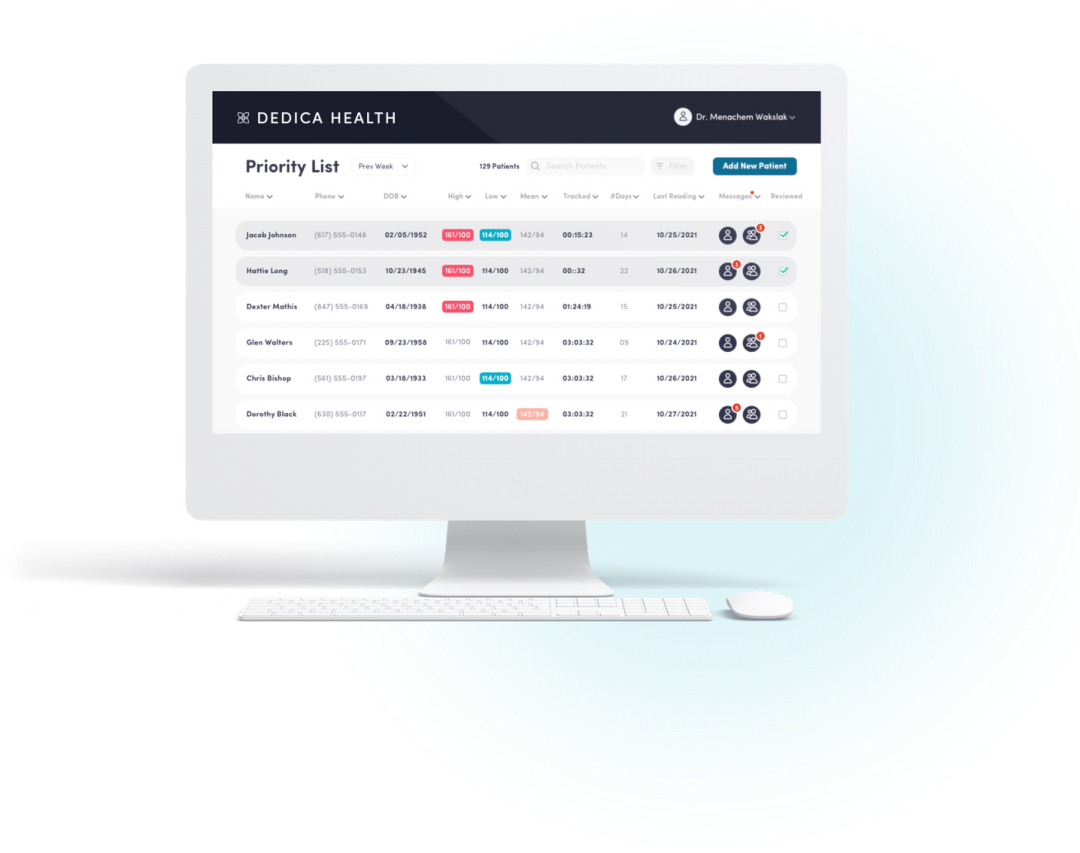
Dedica Health remote patient monitoring dashboard

Remote patient monitoring

Dedica Health

$300Kreported SaaS deal ARR

An RPM web platform bringing sensor data, Validic, and Twilio messaging into care-team dashboards and billing workflows.

Read case study
Allheartz clinician dashboard for remote therapeutic monitoring

Computer vision & RTM

Allheartz

Up to 80%less time spent on clerical work

Computer-vision RTM software syncing patient video exams and joint-angle measurements to clinician dashboards and recovery plans.

Read case study
OC Hospital virtual clinic patient interface composition

Epic integration

Virtual Clinic for OC Hospital

Epicpatient profiles and visit summaries connected

Patient and provider tools connected to Epic through FHIR, with patient lookup and visit summaries across mobile and desktop.

Explore the integration

What our clients say

Gale AI: Grant Muller
LnQ: Ryan Majoria
algorx: Adam Hotchkiss
Walker Tracker: Taylor Welsh
Colin Mansfield, Founder of Allheartz
Our challenge was somewhat unique. I was looking for a development company that could handle novel technologies and had experience working with early-stage startups. From the start, I had peace of mind about the outcomes of this project — it’s hard to put a price on that. Their flexibility and their previous expertise in bringing great solutions to the market are remarkable. Full review on Clutch >>
View reviewer profile

EHR integration and interoperability

We connect your healthcare software with EHRs and clinical systems to support everyday workflows. EHR/EMR integration starts with the data you need, access permissions, and where it goes.

Connected clinical workflows

Bring patient records, visit summaries, and relevant results into the tools clinicians and patients already use.

Standards that fit the system

Use FHIR R4 and SMART on FHIR where supported, with HL7 v2 feeds or DICOM exchange when the workflow requires them.

Validated data exchange

Map fields and reconcile patient identities, then test access and error handling for each supported read or write operation before go-live.

  • FHIR R4
  • SMART on FHIR
  • HL7 v2
  • DICOM

Our integration experience includes Epic and athenahealth. API access and write-back depend on the vendor, provider, and project scope.

From clinical data to usable workflows
  1. EHR & clinical systemsRecords · visits · results
  2. Integration layerMap · validate · control access
  3. Your healthcare softwareCare teams · patients · operations

You own the integration layer: FHIR mappings, interfaces and data stay yours.

Legacy healthcare software modernization

Unsupported components, missing APIs, or scaling limits can hold back an otherwise useful system. We modernize in phases, adding integration points and replacing the parts that need work while planning for continuity of clinical operations.

Map dependencies, security gaps, and data quality. Define what to retain, replace, or expose through new APIs.

Medical device software and SaMD

Our medical device software development connects devices, companion apps, and care workflows. We scope each build around its intended use.

Device connectivity

Connect sensors and wearables through BLE or supported device APIs, with pairing, synchronization, and reconnection flows.

Companion software

Build patient and clinician interfaces for device setup, measurements, and daily use.

Device data pipelines

Bring device readings into secure storage and dashboards, with timestamps, validation, and links to relevant care workflows.

Regulated software and SaMD

SaMD is software with an intended medical purpose that is not part of a hardware medical device. We scope risk management, verification, requirements traceability, and IEC 62304 lifecycle work around the intended use and the client’s quality system.

AI-native healthcare software, workflows and agents

Turn clinical and operational inputs into useful drafts, insights, and coordinated actions. Explore where AI can help and where people stay in control.

  1. Input

    Encounter context

    Authorized notes, transcripts, and relevant EHR data.

  2. AI work

    Draft a note

    Draft documentation from approved notes or encounter transcripts.

  3. Human review

    Clinician review

    Check accuracy, edit, and decide what enters the record.

  4. Reviewed output

    Signed documentation

    Reviewed notes move into the approved workflow.

Illustrative workflow

For PHI workflows, we scope data access, appropriate BAAs, audit trails, and review rules. Staff approve clinical outputs and consequential agent actions.

GaleAI medical coding interface across mobile and desktop

Featured project

GaleAI: AI medical coding in practice

We helped build an AI medical coding platform with EHR integrations, turning clinical notes into coding support.

Read the GaleAI case study
97%less time spent on coding
Up to 15%higher revenue reported

Results reported in the published GaleAI case study.

More from the GaleAI case study

Problem: Medical coding is slow and error-prone at scale—teams miss codes (and revenue) and burn time reviewing huge volumes of notes.

Solution: We helped build GaleAI, an AI medical coding platform that can analyze thousands of notes in a few seconds and cut coding effort by 97%, with integrations into EHR/medical APIs.

Outcome: Reported gains include up to 15% higher revenue. In a 1-month audit, GaleAI identified 7.9% more codes than human coders—equated in the case study to $1.14M/year in lost revenue from undercoding, with the tool’s cost noted as <1% of gained revenue.

Planning an AI feature on clinical data?

Talk to the team that built GaleAI

Core capabilities we build into custom healthcare software

We build custom healthcare software around your operating model, with connected records and permissions for each workflow.

EHR/EMR data exchange

Exchange validated records and track sync errors.

PHI safeguards & audit logs

Protect PHI with encryption, access controls, and audit logs.

Role-based access & SSO

Set role permissions and connect SSO to your identity provider.

Workflow automation

Route tasks with reminders, flagging exceptions for staff review.

Claims, billing & eligibility

Connect eligibility, claims, and payments via APIs or scoped X12.

Analytics & reporting

Build role-specific dashboards, reports, and exports.

AI/LLM with human review

Draft and analyze with staff approval before consequential actions.

Multi-site & multi-tenant

Centralize access across configured sites while keeping tenant data separate.

Technologies our healthcare software developers use

Our healthcare software developers choose the stack around your existing systems, deployment requirements, and long-term support needs.

Backend
Node.js · Python · .NET
Web
React · Next.js · TypeScript
Mobile
Swift · Kotlin · React Native · Flutter
Cloud
AWS · Azure · Google Cloud
Data
PostgreSQL · Snowflake · BigQuery · ETL · Reporting pipelines
Interoperability
FHIR · HL7 · Integration engines
AI & ML
Azure OpenAI · Claude · Private LLMs · LLM APIs · RAG · Vector databases
IoT & Devices
BLE · Device SDKs

Compliance built into every release

Compliance requirements guide each release plan and the tests needed to collect supporting evidence. We scope safeguards around your data, users, and intended use.

Safeguards matched to your data

Scope encryption in transit and at rest, MFA, permissions, audit trails, and cloud/AI safeguards around PHI flows and applicable BAAs.

Link regulated-software requirements, risks, and verification evidence.

  • HIPAA & HITECH
  • GDPR where applicable
  • FDA / IEC 62304 for regulated software

Defined in the engagement

Your data trains no one’s model
Your patient data never trains our models or anyone else’s. We define PHI access, eligible services, applicable BAAs and vendor responsibilities.
Code & IP terms
Ownership, reusable and third-party licenses, and handover.
Audit evidence
Security documentation and agreed test results.
Post-launch support
Coverage, support period, and response targets.

Healthcare software testing and QA

We test critical workflows and release changes against agreed acceptance criteria. Assessments and regulated-software evidence are scoped to product risk.

  • Functional scenarios

    Test permissions and edge cases within care-team workflows.

  • Integration validation

    Check scoped FHIR, HL7, or DICOM exchanges and failure handling.

  • Performance & load

    Check peak-load response times and recovery from failed jobs.

  • Security testing

    Test access boundaries; scope penetration testing before launch.

  • Accessibility

    Check keyboard access, screen readers, and WCAG 2.1 AA criteria.

  • Clinical usability

    Review key tasks with clinicians and other intended users.

Healthcare software development cost and timelines

Plan your first release around a defined scope. These USD planning estimates show the investment and delivery windows for six common project types.

Healthcare software project costs, delivery windows and baseline scopes
Project typeTypical investmentTime to first releaseBaseline buildStandards and integrations
Focused platform MVPA defined first release
$60K–$120K
8–16 weeks
One interface, core workflow, access controls and HIPAA safeguards; no EHR write-back.
PHI safeguards; no EHR write-back
Single-EHR integrationEpic production example
$50K–$200K+
6–12 monthsTo first production go-live
A defined data flow in an existing product, connection development, validation and site coordination.
Epic; scoped API access
Data and analytics platformTwo read-only feeds
$120K–$220K
12–24 weeks
Normalized storage, operational dashboards, exports, permissions and auditability.
Read-only feeds; audit logs
AI feature on clinical dataA focused retrieval assistant
$60K–$120K
8–16 weeks
Curated data, a hosted model and human review on existing secure infrastructure.
Hosted LLM; scoped PHI access
Enterprise platform or modernizationA defined release or bounded phase
$220K–$450K+
20–40 weeks
Multiple roles, deeper integrations, resilient architecture and a scoped migration where needed.
Scoped interfaces; migration controls
Ongoing supportCoverage agreed for your system
Scoped monthly quote
Ongoing
Maintenance coverage, hosting allocation, integration upkeep and response targets.
Existing stack; agreed PHI controls

Final costs depend on requirements. Analytics, AI and modernization ranges are estimates for the baselines shown. Epic’s window includes production validation and site coordination. The AI scope excludes custom model training, autonomous clinical decisions and new EHR write-back.

What shapes your budget and timeline

Data quality, read/write access and rollout requirements affect both budget and timing. Discovery defines the release scope before we commit to a delivery plan.

  • Integrations
  • Compliance scope
  • AI complexity
  • Data migration
  • User roles
  • Team size

Explore the healthcare software development cost guide.

Our healthcare software development process

Your healthcare software product development plan starts with who uses the system and where data needs to move.

  1. Healthcare software developers discussing product idea feasibility

    Discovery

    Map workflows, architecture, integration points, and compliance needs to define your first release.

  2. creative designers planning user experience ux

    Design

    Prototype clinician and admin workflows, including permissions and the screens staff use during care.

  3. UI designers at work

    Build

    Plan 2-week sprints with security checks and reviewable releases every 2–4 weeks.

  4. coding pharmacy app development

    Testing and QA

    Test clinical workflows and data exchange; scope IEC 62304 verification where the product is SaMD.

  5. QA engineers testing mobile apps

    Launch and support

    Validate migrated data and the cutover plan, then support staff through the first live release.

SDLC in healthcare means a software development life cycle covering clinical workflows, PHI controls, integration checks, and release validation. Read the SDLC answer.

Custom healthcare software vs off-the-shelf

Choose custom medical software development when available products can’t support your workflow or data exchange.

Compare custom healthcare software with an off-the-shelf product
DecisionCustom buildOff-the-shelf product
Workflow fitCustom software development for healthcare starts with your clinical workflow.Configure the vendor’s existing workflow.
IntegrationBuild the interfaces your systems need.Check API access, fees, and vendor support.
5-year costBuild, hosting, upkeep, and feature work.Licenses, setup, interfaces, and price changes.
Compliance ownershipDefine controls and keep evidence with your delivery team.Check vendor controls; document your configuration and use.
Code and data rightsYour contract defines code, IP, licensed components, and data rights.Check product licensing, data rights, and export terms.
Time to first releaseDepends on build scope and integration readiness.Depends on configuration and vendor onboarding.

Buy when the product covers your core workflow and connects to your existing systems. Check its data exports and license terms before you commit.

Healthcare software development FAQ

The questions we hear before a healthcare software build.

What is healthcare software development?

We build software around how you deliver care and run your business: clinical tools, operational systems, billing workflows and patient-facing platforms. The work includes the data connections and safeguards those workflows need.

What do your healthcare software development services include?

We take projects through discovery and technical design, product design and development, connections to existing systems, testing and launch. The scope of services depends on your product’s data and the systems it needs to connect.

How much does custom healthcare software development cost?

Plan $60K–$120K for a focused platform MVP, or $220K–$450K+ for an enterprise release or major modernization phase. The Epic production example is $50K–$200K+; integration depth, compliance scope and data migration move the budget. Our healthcare software development cost guide explains the underlying ranges.

What should we look for in a healthcare software development company?

Look for comparable healthcare projects and evidence that the team has shipped your EHR or device connections. Ask to see the BAA terms, security/testing evidence and code ownership clauses; compare an outside team’s delivery and support coverage with the people you can staff in-house.

How long does it take to build custom healthcare software?

The current planning windows are 8–16 weeks for a focused MVP or scoped AI feature; 12–24 weeks for a data platform; 20–40 weeks for an enterprise release or modernization phase; and 6–12 months to first production go-live for the Epic example. The Epic window includes site approval and production validation.

What is the software development life cycle (SDLC) in healthcare?

Our healthcare software development process runs through discovery, design, build, QA and launch. Healthcare adds PHI threat checks and validation of EHR and device data flows; SaMD projects also need IEC 62304 lifecycle work scoped to their classification.

Should we build custom software or buy an off-the-shelf product?

Buy when a vendor’s product already fits your workflow and connects to the systems you depend on. Build when your workflow needs different behavior or existing vendors leave data gaps you can’t work around.

Can you integrate with Epic, Oracle Health and other EHRs?

Yes. We scope Epic, Oracle Health and athenahealth connections using FHIR R4, SMART on FHIR or HL7 v2 where the vendor supports them. Your data access and each site’s approval process set the path to production.

Do you develop medical device software and SaMD?

Yes. We build device companion software and connections that move sensor data into care workflows. For SaMD, we agree IEC 62304 lifecycle work and risk management with your regulatory team, plus FDA submission documentation where applicable.

Can you modernize our legacy healthcare system without downtime?

Downtime depends on your current system and the migration scope. We reduce cutover risk with phased migration and parallel running, then agree the maintenance window and rollback criteria before production changes.

Do you sign a BAA and how do you protect PHI?

Yes, where the engagement calls for a BAA; we agree it before access to PHI. Your agreed security scope covers access controls, audit logs, encryption, backups, and approved vendor/data flows.

Will our patient data be used to train AI models?

No. Your patient data never trains our models or anyone else’s. We act as custodians of your data, and you retain ownership.

Who owns the source code and IP?

Client ownership applies to the custom deliverables covered by your agreement. We document transfer terms and any exceptions for pre-existing or third-party code before development starts.

Do you provide support after launch?

Yes, with coverage and response targets set in your support agreement or SLA. Budget about 25% of build cost each year for upkeep, with hosting and third-party fees itemized. New feature work and AI model usage are scoped separately.

Start your custom healthcare software development project

Start with one workflow your team needs every day.

Our custom healthcare software development services can begin with a focused platform release or one connection to your EHR. We’ll map the data access and review steps before you commit to the wider build.