

Imagine sitting at your desk, staring at a dashboard full of fragmented information from various systems. One system captures critical lab results, another logs medication history, while a third houses physician notes. Piecing together this puzzle to deliver actionable insights feels like a full-time job.
Meanwhile, your team grapples with mounting pressure—improving patient outcomes, staying compliant with evolving regulations, and keeping up with the rapid pace of innovation, all while wrestling with outdated tech and rigid data silos. You know better than anyone that interoperability isn’t just a buzzword—it’s a necessity.
Clinical data integration is the key to solving this chaos. When done right, it not only connects these disparate data sources but transforms them into a seamless, secure ecosystem that drives smarter decisions, streamlines operations, and most importantly, improves the quality of care.
This blog explores the strategies, tools, and best practices that healthcare leaders need to unlock the full potential of medical data integration. It’s time to turn those fragmented dashboards into a unified, powerful tool for better patient care and operational excellence.
Key Takeaways:
- Interoperability as a Catalyst: Effective clinical data integration hinges on interoperability standards like FHIR and HL7, which enable seamless data exchange across diverse systems, enhancing decision-making and operational efficiency in healthcare environments.
- Real-Time Data for Better Outcomes: Leveraging real-time data integration allows healthcare providers to make timely, informed decisions, improving patient outcomes by enabling proactive interventions and reducing delays in care delivery.
- Strategic Use of Emerging Technologies: Incorporating AI and IoT in data integration strategies not only automates routine tasks but also enhances predictive analytics, offering deeper insights into patient health trends and optimizing resource allocation.
Table of contents:
- What is data integration in healthcare?
- Key benefits of healthcare data integration for patient care and operations
- Data integration tech for healthcare systems
- Overcoming challenges in data integration in healthcare
- Best practices for health data integration
- Real-world use cases of clinical data integration
- Integration excellence with Topflight
What is data integration in healthcare?
Healthcare data integration is the process of collecting and combining data from various sources across the healthcare ecosystem into one unified, usable view.
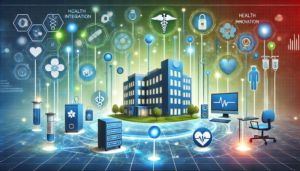
In practice it means building bridges between siloed systems (EHRs, radiology platforms, wearables, billing) so information lands where it’s needed, intact and on time.
Wiring the systems together is the smaller job. The real work is making the exchanged data clean enough to fuel decision-making, which is what interoperability means in practice: systems trading data each side can actually use.
The importance of healthcare data integration is easiest to see where it’s missing
Healthcare has always been a data-heavy industry, and most of that data still lives in silos: labs, pharmacies, imaging centers, telehealth platforms, consumer health devices.
Take one concrete case: a patient’s medication history sits in a pharmacy system, and you need it to adjust a care plan in real time. Without working data sharing, you’re guessing, or deciding from half a record.
Integration closes that gap. Done well, it can:
- Raise patient safety and care quality, because clinicians see complete, real-time patient records across the continuum of care.
- Cut manual data entry, the error-prone kind, by automating processes like medical document automation.
And it modernizes the foundation underneath, so newer tech like AI analytics has clean data to run on instead of choking on legacy exports.
Modernizing healthcare systems starts with integration
Demand for integration has jumped across the board, in major hospital networks and private practices alike. Healthcare organizations now pull from more data sources than ever: traditional medical records, wearable devices, and social determinants of health.
And the systems have to keep growing with the organization. Implementing FHIR standards or open APIs now is what keeps the stack ready for whatever lands next, AI-driven diagnostics included.
Read more on healthcare app development
Falling behind gets expensive
Providers that put off healthcare data integration end up bogged down in outdated, cumbersome systems. The bill shows up as duplicate records, bad data, compliance exposure, and, worst of all, weaker patient care. The day-to-day inefficiencies compound too: a missed diagnosis here, a delayed handoff there, and costs climbing the whole time.
Key benefits of healthcare data integration for patient care and operations
Data runs everything in modern healthcare, and integrating it well pays off twice: in the care patients get and in the operations underneath.

When the integration holds up, the whole place runs differently, front desk to bedside.
1. Care decisions are only as good as the record behind them
Treatment decisions made on incomplete or outdated information are risky, and clinicians make them every day without knowing it. One of the major benefits of clinical data integration is that care teams get the full picture of the patient in real time, because data from EHRs, labs, imaging, and wearables lands in one accessible place.
With the whole record in front of them, clinicians can:
- diagnose with every lab result and image in view
- tailor treatment to the individual patient
- catch risk signals early, adverse drug interactions included
- skip the duplicate tests a fragmented record forces
That’s where the analytics payoff sits too. Through clinical data integration, algorithms built on business intelligence flag high-risk patients as the data comes in, like ICU patients trending toward sepsis, and the life-saving response starts sooner.
2. Integration pays for itself in operations first
Healthcare systems bleed time in predictable spots, mostly manual data entry and the miscommunication that siloed departments breed. Integration goes after both. Where it shows up:
- Workflows: connected systems cut redundancy and automate the scheduling and billing checks that eat staff hours. The back-and-forth calls between billing departments and primary care just to confirm insurance details disappear once the systems share data.
- Technical debt: legacy systems that can’t talk to each other are the Achilles’ heel of healthcare organizations. Consolidating them under one connected architecture cuts long-term maintenance costs.
- Coordination: a single source of truth lets care teams work from the same record, which matters most in complex cases with multiple specialists in the loop.
Large health systems running conversational AI in healthcare show the compound effect: patients book appointments and pull lab results without touching administrative staff, and the AI only works because medical data integration feeds it consistent records.
3. Big data only pays off after integration
Healthcare sits on more data than almost any industry, and most of it stays fragmented enough to be aggravating instead of useful. The advantages of connected clinical data show up fast once the info actually flows.
Data quality comes first: integration enforces standardization across datasets, so the info feeding your reports stays clean and consistent, from patient records to financial statements.
Then the AI layer. Machine learning runs on volume and consistency, and health data integration supplies both. Connected platforms can monitor diabetic patients through IoT devices and flag blood sugar spikes before they happen.
Benchmarks sharpen too. Hospital administrators can pull average discharge times or readmission rates on demand, the numbers compliance reviews and care planning actually need.
Patients notice the difference too
And medical data integration reaches the patient directly. Clinicians acting on complete, accurate records deliver safer, smoother care, and patient portals give people a working window into their own health.
Two examples:
- Patients read lab results, medication lists, and doctor notes straight from their phone, and engagement follows access.
- Telehealth moves between virtual and in-person care without dropped records or duplicated work. Telehealth EHR integrations, built on clinical data integration, keep the chart consistent whichever way the visit happens.
Check out our healthcare app development services
Data integration tech for healthcare systems
Interoperability and data sharing live or die on the technology underneath. Pick the right data integration technologies for healthcare systems and the fragmented mess turns into one working ecosystem; pick wrong and you’ve automated the chaos.

APIs carry most of the integration load
APIs do the day-to-day connecting in healthcare integration: they let an EHR, a wearables feed, a telehealth platform, and a billing system trade data with precision and speed, no full overhaul of legacy infrastructure required. What they buy you:
- flexibility around legacy systems
- fewer manual handoffs and human errors
- room to plug in new tools without breaking workflows
The classic case is bridging an existing EHR with a telehealth platform so patient data captured during virtual visits syncs into the primary record on its own. The record updates itself.
FHIR and HL7 make the connections mean something
If APIs are the vehicle, FHIR and HL7 are the rules of the road. Standards are what make a connection meaningful and compliant instead of merely live.
- FHIR (Fast Healthcare Interoperability Resources) is the modern standard built for data sharing in health care. Lighter than the older models and API-friendly, it lets systems share just the needed slice of a record, a medication history or a single lab result, rather than the whole chart.
- HL7 has carried interoperability in healthcare for decades. Heavier than FHIR, sure, but it stays foundational wherever legacy systems are involved.
Either way the result is shared language: data from EHRs and imaging systems arrives meaning the same thing on both ends. Fewer translation errors, fewer compliance surprises.
A common deployment: FHIR-based APIs linking a hospital’s inpatient facilities with its outpatient clinics, so a patient arriving for follow-up care has their complete history on screen before the visit starts. No repeat bloodwork because the chart didn’t follow them.
Big data tools turn volume into insight
Healthcare data keeps growing faster than anyone’s capacity to read it, from EHR exports and imaging to wearables. Big data technologies exist to process the tidal wave. The tools doing most of the work:
- Data lakes and warehouses: central repositories that hold enormous volumes of structured and unstructured health information.
- Analytics platforms: machine learning algorithms that pull trends and risk signals out of combined datasets in real time.
- Health-data schemas: models tailored to healthcare formats that speed up analytics for decision-making.
Aggregate that across a regional network and you can spot a local spike in chronic illness early enough to move resources and staffing before it turns into a crisis.
Health Information Exchange networks work at a different scale
Health Information Exchange (HIE) platforms push integration past the walls of a single organization. Providers and payers share patient data securely at scale, and public health agencies tap the same pool.
The payoff compounds. A clinician sees the patient’s full history across every facility they’ve touched, so conflicting treatments get caught before they happen. Aggregated data gives healthcare systems a population-level view for spotting public health trends. And standardized data sharing makes regulatory reporting less of a quarterly scramble.
During COVID-19, hospitals and clinics connected through HIEs shared live case and vaccine data and kept pace with reporting requirements under the worst possible conditions. That was the proof of concept, in public.
Emerging tech belongs in the plan now
Integration also has to hold up against what’s arriving next. AI is already intertwined with clinical data integration: tools like medical document automation summarize and interpret records at a scale no human team matches.
- Blockchain is gaining traction for recording and verifying data exchanges, a tamper-resistant layer for sensitive health records.
- IoT keeps widening the funnel: wearables and remote monitors feed in more data, in more formats, every quarter, and the integration layer has to swallow it as it streams.
Healthcare organizations that build for these now skip the expensive retrofit later.
Pick tools for the organization you actually run
Start with an audit of what you already operate, then match the technology to your needs rather than the other way around. Not every provider needs the same model: what fits a large hospital network is overkill for a smaller practice, and the smaller practice’s stack would buckle under network-scale load.
Bring in integration expertise where the audit finds gaps. And weigh growth honestly: the option that handles today’s volume but stalls at twice the size just schedules your next migration.
Tools and standards are means; outcomes are the test. The stack you pick should move info to where patient care and compliance need it, and otherwise stay out of the way.
Overcoming challenges in data integration in healthcare
Medical data integration is a linchpin for modernizing healthcare, and the road there is rarely smooth. The outcomes you’re after (better patient care, tighter compliance) aren’t optional, but the barriers are real: aging infrastructure and a regulatory layer that keeps shifting. Here’s what stalls most projects, and what clears the stall.
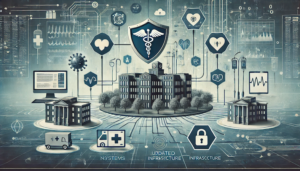
1. Data silos are the default state
One of the biggest hurdles in data integration in healthcare is how scattered everything starts. Patient records and clinical results live in one set of systems, administrative info in another, and third-party software at external providers holds pieces nobody inside can see. None of it flows.
Symptoms of data silos
- Information sharing lags behind care, so patient care waits on whatever arrives last.
- Duplicate entries pile up while clinicians rebuild patient histories by hand, and the rebuilt version is the one with gaps.
Solutions that hold up
- Interoperability standards: FHIR and HL7 make disparate systems connectable. A hospital network on FHIR-enabled APIs can pull cardiology reports from external specialists straight into the in-house EHR, no waiting.
- Data consolidation: migrating to a centralized cloud repository unifies access to patient records and cuts the redundancy between departments.
Automate the exchange between departments too, so the flow doesn’t depend on anyone remembering to push a file. The delays and errors silos manufacture land in care delivery, and that’s the cost that matters.
2. Outdated infrastructure can’t carry modern integration
Legacy systems designed decades ago are another common roadblock to effective healthcare data integration. The pattern repeats across organizations:
- maintenance costs climb while ROI shrinks
- new data sources (wearables, telehealth feeds) have nowhere to plug in, and the aging security protocols underneath turn into compliance risk
Steps to modernize
- Run an IT audit first: find where the limits actually are. The classic discovery is an EHR that takes hours to ingest lab data other systems handle in seconds; gaps like that set the upgrade priority for you.
- Go modular: API-based and microservices architectures let you replace one function at a time instead of overhauling everything at once.
- Use the cloud’s elasticity: cloud environments flex with demand and trade brittle add-ons for cohesive, real-time data pipelines. Technical debt shrinks as the duct tape comes off.
Modernizing this way means integrating today’s requirements while operations keep running and costs stay predictable.
3. Data privacy and security set the constraints
The more healthcare data you move, the more you have to protect. Patient trust rides on how their details are handled, so treat protection as a design constraint that touches every integration decision.
HIPAA violations after a breach of patient records top the list, with unauthorized access to sensitive health information during data migration or collection close behind. Remote patient monitoring adds its own exposure: readings from at-home devices, mismanaged somewhere between the device and the chart.
The mitigation playbook starts with role-based access control, so only the people who need a dataset can touch it. Encrypt patient records in transit and at rest; during EHR data migration especially, encryption keeps the transfer compliant even over public networks.
And put real money into secure, well-documented APIs with layered authentication. Locking down security this way protects trust and compliance at the same time, and a quiet cybersecurity record keeps operations running uninterrupted.
4. Compliance gets cheaper the earlier you design for it
Compliance is both an obstacle and a necessity. Regulations around data privacy, sharing, and storage (HIPAA in the U.S.) exist to keep healthcare delivery ethical and secure, and following them genuinely makes data integration harder.
The friction is concrete: data-sharing policies that don’t match between organizations, and an audit-trail documentation load that grows with every new connection. Compliance approvals then add their own weeks before any new system or process goes live.
Two design-time moves keep regulation from becoming the bottleneck. Build compliance in from day one, audit logs on every info-sharing activity included. And pick vendors and platforms that meet regulatory standards out of the box, so your internal IT team isn’t building compliance from scratch.
Then keep watching the frameworks themselves. Updates from organizations like the ONC (Office of the National Coordinator for Health Information Technology) land regularly, and yesterday’s compliant setup quietly stops being one.
With the regulatory thinking done at design time, audits stop being events and the workflows run clean.
Done this way, compliance pays twice: audits stop being events, and the workflows run clean because the regulatory thinking happened at design time.
5. EHR data migration is scarier than it needs to be
Moving from one EHR system to another has a reputation, and organizations hold off on overdue upgrades just to avoid the disruption. The pitfalls are well documented: data loss during transfer, legacy records especially, and compatibility gaps between the old system and the new. And the downtime risk hangs over everything, since an extended outage hits patient care and compliance at once.
Strategies for a clean EHR data migration
- Go incremental: split the migration into phases so no critical record gets lost or overlooked in one giant cutover.
- Bring in migration expertise: an internal team that’s done it before or an external partner, either way the experience cuts both the timeline and the error count.
- Run old and new in parallel: keep both systems live until the new platform proves itself. The overlap costs something; the rollback option it buys is worth more.
Plan it like this and the upgrade happens without gambling care quality or data integrity to get there.
Best practices for health data integration
Health data integration that actually works needs a deliberate strategy and disciplined adherence to industry standards. The test of both is data that’s reachable at the moment of need. Whether the goal is smoother cross-department workflows or data-driven decisions at the bedside, these best practices are where the difference gets made.
Interoperability standards come first
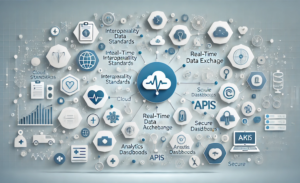
Standards are what keep data meaning the same thing as it moves between systems. Two worth committing to:
- FHIR: built for modern healthcare, it exchanges granular data elements (a medication list, a lab result) without losing the context around them.
- HL7 v2 and CDA (Clinical Document Architecture): older, still load-bearing wherever legacy systems sit in the chain.
An integration strategy built on these foundations stays compatible with what you run today and leaves room for what you’ll add later.
Action tip: wire FHIR-based APIs into your ecosystem early; they’re the cleanest path to third-party apps and external data sources down the road.
Prioritize real-time data exchange
Batch processing had its decades. Real-time integration lets healthcare teams act on current patient records instead of yesterday’s sync, and the gains show up in:
- live patient metrics, from wearables to ICU monitors, that surface critical conditions sooner
- automated scheduling and patient intake that stop queueing behind a human
- alerts that flag at-risk patients or a coming medication shortage before either becomes the day’s emergency
Hospitals that pair real-time analytics with their EHR cut emergency department wait times through automated triage and smarter resource allocation.
Action tip: start where the payoff is most visible, ICU monitoring or telehealth integrations, and let those wins carry the rollout.
Establish data governance and standards early
Without governance, integrations sprawl. Set the policies early and the systems stay consistent and compliant. Standardize:
- Data formats: universal formats like JSON or XML guarantee compatibility across platforms.
- Access permissions: role-based limits so only authorized hands touch sensitive information.
- Audit trails: traceable records of every data transaction, which is most of compliance reporting done in advance.
The payoff is mundane and constant: one consistent schema between departments means patient records stop getting misread on handoff.
Action tip: write the SOPs down and drive adoption with training sessions or compliance audits. Undocumented governance is folklore.
If you’re ready to turn that spec into running code, our primer on how to build a SMART on FHIR app walks through the full workflow, from scoping scopes to sandbox testing.
Accessibility doesn’t have to cost you security
Info that’s hard to reach is about as useful as info trapped in a silo. The good news: accessibility doesn’t need to come at the cost of security or compliance, as long as the controls are built in rather than bolted on.
Role-based access control decides who touches what. Secure mobile channels let an on-the-go clinician check a record or confirm a dosage without opening a hole in the perimeter, and encrypted APIs keep data exchange with third-party platforms from exposing anything sensitive.
Patient portals show the balance working: individuals read their own lab results and health summaries, and multi-factor authentication guards the door.
Action tip: layer the verification at sensitive entry points, portals and EHRs first; that’s where usability and security meet.
Use AI for summarization and the operational grunt work
AI has moved to the center of data integration work. Tools such as AI medical records summary systems let clinicians digest enormous volumes of health data without the oversights that come from skimming.
- Long clinical notes condense into summaries a clinician can absorb between patients.
- Live patient data from connected IoT devices feeds models that flag health events before they arrive.
The grunt work shrinks too. Claims processing and medication reconciliation run on autopilot, and AI-driven medical document automation hands charting time back to patient care.
Action tip: pilot one AI tool and measure the ROI before any wider rollout. Small start, honest numbers.
Test and iterate, because v1 never lands clean
No integration project is flawless out of the gate, so build the feedback loop into the architecture. Pre-deployment testing catches the predictable failures. The end users find the rest, so keep a channel open for their complaints and watch the performance numbers after every release.
Action tip: stand up a performance dashboard tracking time saved and error rates, with compliance checkpoints folded in. Those numbers settle most arguments about whether the integration is working.
Real-world use cases of clinical data integration
Three builds from our own portfolio, each showing a different face of data integration in production.
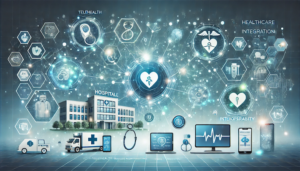
RTHM: telehealth integration for complex conditions
Telehealth extends care past the clinic walls, and it only works as well as the data integration underneath. RTHM, a health monitoring platform treating complex conditions like ME/CFS and Long COVID, is the proof case. The integration work:
- Infrastructure: no-code/low-code frameworks let RTHM adapt its ecosystem fast, a mobile app for patients on one side and a web platform for physicians on the other.
- Wearables: the system pulls data from Apple Health and Google Fit and normalizes the metrics, heart rate, activity levels, into one clinical view.
And the pieces unify: patient health data flows through the whole system, so providers see live, usable numbers instead of export files.
Dedica Health: remote patient monitoring in cardiology
Remote patient monitoring is one of the strongest cases for data integration changing care delivery, and Dedica Health, our build for a cardiology practice, shows the mechanics. Clinically certified medical sensors capture vitals (blood pressure, heart rate) and feed them straight into the platform, no manual entry anywhere in the loop.
From there the system automates the visualization and sorts critical cases up the queue, so physicians triage by severity instead of by arrival order. And compliance came baked into the design: the platform syncs with billing codes and Medicare RPM guidance, so care provision and reimbursement stay on the same page.
GaleAI: AI medical coding inside the EHR
EHR interoperability is a perennial headache for healthcare organizations. GaleAI, an AI medical coding platform, shows what solving it actually buys in clinical documentation and reimbursement. Under the hood:
- AI coding: machine learning and natural language processing scan medical notes and generate accurate CPT codes in seconds.
- EHR integration: the platform connects directly with leading EHR providers like Epic and Athena over FHIR-compliant APIs. If your project requires connecting specifically with Epic, our dedicated guide on Epic EHR integration covers the technical requirements and API approach in detail.
The same secure integration syncs EHR data into pre-authorization workflows, so physicians and payers work from the same numbers.
What the three builds have in common
RTHM, Dedica, and GaleAI each cover a different corner of clinical data integration and management, and the threads connecting them are hard to miss. Every build leans on open standards and disciplined API work to unify systems that were never designed to talk. Every build automates the manual layer, whether that’s coding or monitoring, because friction in data management always ends up as friction in care.
Patient-centric design threads through all three as well. Info moves the way patients and providers actually work, and engagement follows. Together the three are proof points: thoughtful integration, implemented well, reshapes how care gets delivered.
Integration excellence with Topflight
Topflight turns fragmented healthcare systems into ecosystems that hold together under real load. We’ve done the EHR integration and compliance work across enough builds to know no two organizations run the same stack, so nothing here comes off a shelf.

Why teams bring integration work to Topflight
- EHR integration depth: from SMART on FHIR APIs to HL7 interfaces, we build the patient data exchange that keeps working after the launch sprint ends.
- Compliance and security: HIPAA-compliant by design, with sensitive health information protected at every stage of the integration.
- Workflows that fit: we design data flows around how your teams already work, so bottlenecks disappear and clinicians keep their attention on patient care.
Whether the job is IoMT integration for real-time monitoring or getting your app onto EHR marketplaces like Epic’s Showroom, the builds above are how we work. When healthcare organizations need medical data integration done right, they come to us. Bring yours.
Frequently Asked Questions
Why is data integration important in healthcare?
Data integration breaks down silos so patient information moves between systems that couldn’t talk to each other before. Interoperability follows, and with it smoother operations and easier compliance. Better care delivery comes downstream of both.
How does healthcare data integration improve patient outcomes?
Clinicians get a complete, current view of patient health instead of fragments, so diagnoses land more accurately and care plans fit the actual patient. Real-time data sharpens both.
What are the costs associated with implementing healthcare data integration?
Costs vary with complexity and scope; software tooling and consulting are the visible line items, and compliance work rides along with both. The ROI usually justifies the spend, because the savings keep showing up in care quality and workflow hours long after launch.