

How Much Does it Cost to Make an App?: The average cost of developing an app ranges from US $60,000 to $250,000.
Today, nearly every entrepreneur is clamoring to bring their business to mobile devices. When in the market for a new mobile app, business owners might be surprised at upfront costs of app development. “It’s just an app. How much could it really cost to make?” Depending on what’s needed: a lot…or not much.
The truth is, as software developers, we can only come up with estimates for custom web or mobile products. The final price tag will come down to things like the number and complexity of screens, platform choice (multiplatform = more effort), ongoing maintenance, and QA needs.
At Topflight, we break down the cost to build an app by providing an estimate in 3 core areas:
- Design Features – branding, animations, UX/UI design, etc.
- Technical Features – API and platform integrations, application capabilities, etc.
- Maintenance – server costs, bug fixing, OS upgrades, etc.
Entire books cover these subjects. So, it may seem daunting to grasp different elements of app development costs at once. Nevertheless, we’ll attempt to break down how each of these areas affects an app estimate and hopefully demystify the process of budgeting for app development.
Let’s clear up all mystery from “How much does it cost to create an app?”
Top Takeaways:
- Expect to find a complete mobile app development cost breakdown, but note that each application is unique, and this uniqueness drives the total cost of creating an app.
- The average cost to develop an app that’s ready to generate traction and convert users into loyal customers is $80,000.
- The mobile application development cost will be significantly higher when adding AI/ML, GPS, and IoT.
Table of Contents
1. App Development Cost Overview 2026
2. Quick Breakdown: App Development Cost
3. Factors that Affect App Development Costs
4. App Development Cost Depending on Mobile App Complexity
5. App Development Process and Software Costs
7. App Development Cost Depending on Type of App You’re Building
8. App Development Cost Estimation By Business Categories
9. App Development Cost Depending on Complexity of Features
- API integrations
- Machine Learning
- e-Commerce
- Geolocation
- Phone sensors
- IoT integrations
- Accessibility Options
10. Cost of Adding GenAI (LLMs) to Your App
11. App Development Costs by Region
12. App Development Cost Depending on the Team
13. Hidden App Development Costs
14. The “Compliance Tax” in Healthcare App Development
15. Optimizing App Development Costs
- Research Product-market Fit
- Create a prototype
- Streamline project management with Agile
- Stick to the scope
16. App Development Financial Planning Guide
17. App Development Cost Calculators
18. Future of App Development Costs 2025–2027
19. How Much Does it Cost to Build Your App With Topflight?
20. Why Topflight Is the Cost-Smart Partner for App Development
21. Need to Know More about App Cost?
App Development Cost Overview 2026
In 2026, app budgets are less about finding a magic number and more about matching ambition, risk, and runway.
Current Market Pricing Trends
Across recent surveys and agency reports, most 2025 app projects landed somewhere between $10,000 and $500,000+, with the spread driven mainly by complexity, platform coverage, and integration depth.
Simple apps (few screens, minimal backend) still show up in the $5,000–$50,000 band in many cost guides, while “serious” mobile apps with custom backends, third-party integrations, and analytics commonly run $100,000–$500,000+.
If you filter out ultra-basic marketing apps and side projects, most funded teams building a v1 in the US/EU end up in roughly the $80,000–$250,000 window for a mobile app with real workflows, which aligns with what we typically see in practice.
One interesting 2025 twist: hourly rates are softening while project scope is expanding. Global software developer rates have dropped about 9–16% in many regions as AI tools compress delivery time and competition intensifies, but teams are simultaneously adding AI features, multi-platform UX, and more integrations, which keeps total project budgets from falling as fast as hourly prices.
For most founders, the useful way to read all of this isn’t as abstract market trivia but as a sanity check on mobile app development pricing: does your quote roughly line up with these ranges once you factor in complexity, integrations, and team location, or is it suspiciously cheap or inflated for what you’re asking a team to build?
Cost Ranges by App Category
You’ll see different cost bands quoted online; underneath, they tend to collapse into three practical tiers:
Utility / Simple Companion Apps
Think:
- marketing apps
- simple calculators
- basic internal tools with a light backend
Typical build budgets cluster around $10,000–$60,000, especially when you lean on templates or cross-platform frameworks.
Transactional or “Product” Apps
Think: consumer apps with login, payments, notifications, dashboards, maybe chat or booking.
Several 2024–2025 guides put medium-complexity apps in the $50,000–$150,000 band, sometimes up to ~$180,000 with richer UX and integrations.
Enterprise / Regulated Platforms
Think: multi-role apps with heavy backend logic, analytics, and integrations (EHR/EMR, ERP, payment gateways, logistics, etc.).
Here, surveys increasingly cite $150,000–$500,000+ as a realistic range, with many fully custom, feature-rich mobile products averaging in the $100,000–$500,000 band.
The cheap outliers you see in ads (“we’ll build your app for $5k”) almost always assume minimal scope, a template-heavy build, or a team in a very low-cost region — not a durable product you can scale and iterate on.
Regional Cost Variations
App development cost changes sharply by region, but don’t treat any single price as a universal truth. Offshore studies often publish median rates and a neat regional average, yet the typical spread inside each geography is driven by country and seniority—and by whether you’re hiring Senior mobile teams, generalists, or iOS/Android specialists from top agencies in major cities (where overhead is baked into the quote).
In practice, real projects rarely run on a single-region team anymore. Most teams converge on hybrid teams with a blended hourly rate: keep product/architecture leadership close to the business (often US/EU), and scale execution through places like Eastern Europe or LATAM when the work is well-defined. That’s how you get mid-priced quotes that still behave like a senior team—while staying realistic about the new baseline of global rate compression from AI (less “cheap labor,” more “cheaper iteration”).
Quick Cost Assessment Tool
Use this as a 30-second sanity check before you fall in love with anyone’s “from $X” landing page.
If you answer “yes” to a statement, slide your mental budget up a notch:
- “We have 3+ distinct user roles” (e.g., admin + consumer + provider/partner).
- “We need secure login, payments, and at least one major third-party integration” (Stripe, Twilio, EHR, marketplace APIs, etc.).
- “We care about polished UX, not just working screens” (dedicated product/design effort, not purely dev-driven UI).
- “We want a North America or Western Europe lead team” rather than 100% offshore.
Rough rule of thumb for 2025, based on current market data:
- 0–1 “yes” → you may live in the $20,000–$60,000 world.
- 2–3 “yes” → expect $60,000–$180,000.
- 4 “yes” → budget $180,000–$400,000+ for a credible v1, especially in regulated or integration-heavy domains.
You can then cross-check this quick pass against the more detailed breakdowns in the next sections of the blog.
Quick Breakdown: App Development Cost
The cost of developing a mobile app depends on the scope of the project, including app complexity, design requirements, and post-launch maintenance. Below is a detailed breakdown of the costs for each phase of app development.
| Development Phase | Estimated Cost ($) | Description |
|---|---|---|
| Discovery | $4,500 – $8,000 | Aligning audience needs with business goals over 30-40 hours. |
| Prototyping & Design | $15,000 – $30,000 | Crafting user experience and aesthetics through iterative design. |
| Development | $35,000 – $75,000 | Coding the app, encompassing 50-70% of total costs. |
| Quality Assurance | $8,000 – $18,000 | Testing to ensure functionality and adaptability. |
| Deployment | $2,000 – $4,000 | Final app verification and backend transfer. |
| Maintenance | 25% of total app cost per year | Ongoing upkeep for backend systems and integrations. |
| Total Average Costs | $80,000 – $250,000 | Varies by app scope and features. |
The cost to develop a mobile app typically ranges from $80,000 to $250,000, depending on factors such as app complexity, feature set, and development approach.
Cost Breakdown Methodology
These ranges assume you’re building a v1/MVP with real traction potential, not a throwaway prototype. The numbers in the table are based on a typical product team working a few months at a blended rate (design + engineering + QA + PM), with enough time for iteration instead of “one-and-done” sprints.
Think of them as planning brackets, not quotes: they show roughly how much budget each phase usually consumes when a team aims for quality, not just shipping screens.
Why Development Costs Vary
Two apps can both be “MVPs” and still sit at opposite ends of the cost spectrum. The biggest levers are:
- scope: how many user roles, flows, and edge cases you support
- integration surface: payments, APIs, EHRs, internal systems
- team model: US/EU-led vs fully offshore vs hybrid
Add in design polish, compliance requirements, and how often you plan to iterate after launch, and the same idea can be a $60k project or a $250k+ one.
Budget Planning Best Practices
What should you use as a working app development budget template? Instead of starting from a random number, you anchor your spend to the outcomes you need, map those outcomes to concrete phases (discovery, design, build, QA, maintenance), and only then decide how far up or down the ranges you’re willing to go.
A simple way to avoid surprises is to anchor your budget to outcomes, not wishlists. Define the 1–2 business goals your v1 must hit (e.g., paying users, pilot metrics), lock a small set of must-have features to support them, and treat everything else as optional. Then add a 10–20% contingency on top of your ideal number for scope creep, refactors, and “unknown unknowns.”
Cost vs. Value Analysis
A useful question at this stage isn’t “How do we make this cheaper?” but “What are we buying with this spend?” A higher upfront budget might buy you:
- faster time-to-market
- better retention
- fewer rewrites
- smoother fundraising story
A rock-bottom budget often buys you technical debt and a rebuild in 12–18 months. Viewing the table as value tiers—what each level unlocks for the business—makes it much easier to decide where to land.
Factors that Affect App Development Costs
Many factors influence app development costs: development process, type of application, availability of reusable off-the-shelf components, developers’ experience, app complexity, etc. We’ll discuss them in-depth in a bit, but here’s a quick overview.
| Factor | Description | Price Impact |
| Discovery step | Match audience needs and business goals in the 30-40 hour discovery stage; choose development approach wisely to optimize cost and time. | $4,500 |
| Prototyping & Design | Prototyping and design, crucial for user experience and app aesthetics, involve iterative processes and include user testing. | $15,000-$30,000 |
| Coding/Development | App development, accounting for 50-70% of total costs, varies significantly based on app type, existing codebase, backend needs, and scalability. | $35,000-$75,000 |
| QA Testing | QA testing, including unit and system tests, ensures app functionality and adaptability amid technological changes. | $8,000-$18,000 |
| Deployment | Deployment, though brief, involves crucial app verification and backend transfer. | $2,000 |
| Maintenance | Cloud-based backends and third-party integrations necessitate ongoing maintenance costs. | 25 percent of total app cost per year |
| Cross-platform approach | Native apps offer power and features, while cross-platform reduces costs. | up to 40-50 percent cheaper than native |
| PWA | PWAs offer affordability and cross-platform functionality but limit hardware integration. | 30 percent of the native app cost |
| API Integrations | API integrations enable mobile apps to work with external services. | $1,000-$6,000 per integration |
| AI/ML | Machine Learning personalizes app content but increases development costs. | high impact |
| E-commerce | Ready-made e-commerce platforms offer cost-effective mobile shopping experiences. | varies |
| Geolocation | Geolocation integration varies in cost; using native SDKs is economical. | $4,000-$8,000 |
| Using phone sensors | Phone sensors enable advanced features, using APIs increases development costs. | $2,100 per sensor |
| IoT Integrations | Apps may require IoT integrations from external devices, impacting costs. | $9,000 per integration |
| Accessibility Features | Accessibility options are crucial for inclusiveness in app development. | $15,000-$25,000 |
All info here implies developing an MVP (minimum viable product) – the first releasble version of your product – and the most critical aspects that contribute to an app’s price.
Technical Complexity Impact on Cost
The fastest way to blow past your initial estimate is to underestimate technical complexity. The items in the table that look like “just another feature” — AI/ML, IoT integrations, accessibility, multi-role workflows — often behave like mini-projects inside your project. Each one typically increases:
- Architecture overhead – more moving parts in the backend, more data flows to design.
- QA depth – extra test scenarios, devices, and edge cases to cover.
- Compliance/security work – especially once you touch payments, health data, or sensitive PII.
This is why two apps with the same UI can sit in entirely different budget brackets.
Timeline Pressure and Rush Charges
Cost isn’t only “what” you build; it’s how fast you insist on shipping it. Compressing a 6-month roadmap into 3–4 months usually means:
- Running more people in parallel (which adds coordination overhead).
- Making trade-offs: technical debt now, refactors and rewrites later.
- Paying a premium for senior people who can unblock problems quickly.
You can absolutely buy speed, but it rarely comes for free — the bill just shows up either as a higher initial quote or more expensive cleanup work after launch.
Post-Launch Cost Considerations
The table already hints at this with maintenance ≈ 25% of initial build per year — and that’s before ambitious roadmap changes. Ongoing costs typically cluster into:
- Run costs – cloud, databases, monitoring, 3rd-party SaaS/SDK fees.
- Care and feeding – bug fixes, OS/device updates, security patches.
- Growth work – new features, experiments, and refactors as you learn from users.
If you budget only for the build and not the first 12–18 months of life after launch, every surprise will feel like “overrun” rather than the normal cost of owning a product.
Hidden Cost Factors to Consider
A lot of founders account for “dev hours” and forget the quiet multipliers that show up later in the blog: hidden costs. In practice, you also pay for:
- Product and project management time – both on the vendor side and in your own team.
- Back-office work – analytics setup, logging, alerting, basic reporting.
- Go-to-market plumbing – app store assets, marketing sites, CRM hooks, support workflows.
Later sections dive into hidden app development costs in more detail — this is your early reminder to keep some budget oxygen for the stuff that never fits neatly into a features list.
App Development Cost Depending on Mobile App Complexity
Mobile app development costs can vary significantly based on the complexity of the app. Here’s a practical breakdown to help you gauge the budget required for your app project:
Simple Mobile App – $30,000 to $40,000
Simple mobile apps usually have limited functionalities, basic UI, and no sophisticated integrations. They typically include standard features like user registration, simple forms, minimal backend support, and basic navigation. Think of apps that perform straightforward tasks, such as calculators, simple information-sharing apps, or minimalistic to-do lists.
Mid-size Mobile App – $40,000 to $60,000
Mid-size apps are slightly more feature-rich and usually involve moderate backend development, basic third-party integrations, user authentication, and straightforward data handling. Examples might include fitness trackers, basic e-commerce applications, or event management platforms.
Large-size Mobile App – $80,000 to $140,000
Large-size apps involve comprehensive functionalities, intricate backend development, multiple integrations with external services, advanced user interfaces, and potential real-time features. Consider applications like social media platforms, comprehensive e-commerce apps, or sophisticated telemedicine solutions requiring HIPAA compliance.
Complex Mobile App – $160,000 to $210,000
Complex mobile apps are characterized by advanced technological integrations, sophisticated backend architecture, AI/ML capabilities, extensive security considerations, IoT device connections, and complex business logic. Examples of such apps include advanced healthcare management systems, fintech apps with complex financial operations, or highly interactive gaming apps.
Enterprise-level Mobile App – Starts from $250,000
Enterprise apps cater to large organizations with complex requirements like scalability, high-level security, robust backend infrastructure, and comprehensive integrations with enterprise systems (EHR, ERP, CRM). Such apps often require extensive QA and regulatory compliance, high availability, and custom-designed interfaces for large user groups.
Typical examples include hospital management systems, enterprise communication tools, and large-scale fintech platforms.
App Development Process and Software Costs
Start building an application and you’ll find yourself following a predefined procedure of app creation from the 90s. Today, these app development stages are still crucial for any app development project and affect the cost to develop a mobile app.
Besides laying down the ground rules for building an application, the mobile app development process breakdown shows us how each stage affects the app cost.
Phase 1: Discovery
During the discovery stage you match the needs of the target audience to app functionality and define business goals.
It may take 30-40 hours from the app development budget to complete such business analysis. Remember that the development approach will significantly affect your development timeline.
For example, agile development takes only a couple of days to draw up a plan for the next sprints, whereas the traditional waterfall approach consumes 10 percent of the entire app cost.
Pro Tip: If you’ve done preliminary market research (including proper research of your target audience), we recommend limiting the budget of the discovery step to 30-40 hours / $4,500. Invite business analysts familiar with your domain to sail through this step faster. Then, move on to the design stage — the next step of setting a budget for creating an app.
Discovery Phase Cost Optimization
Tactical ways to keep the discovery phase lean:
-
Do your homework before paying for ours. Come in with a basic problem statement, user personas, and competitor list. The more we’re validating and stress-testing (vs discovering from scratch), the closer you stay to the 30–40 hour range mentioned above.
-
Timebox decisions, not conversations. Lock a fixed number of sessions and define what must be decided by the end: success metrics, user roles, must-have workflows for v1, budget range. Everything else is backlog material.
-
Separate must-haves from “nice origin stories.” Capture interesting ideas, but only tag 3–5 as non-negotiable for v1. The rest go into a parking lot so discovery doesn’t quietly turn into product strategy for the next 3 years.
-
Use domain experts surgically. Bring clinicians, ops, or compliance folks into short, focused interviews rather than full-day workshops. You want their constraints and edge cases, not a committee designing screens.
-
Favor cheap artifacts. Prioritize lean deliverables — problem statement, user flows, rough scope and budget brackets — over glossy decks. The purpose of discovery is to de-risk spend in later phases, not to generate documentation you’ll never read again.
Phase 2: Prototyping and Design
The next step after the discovery is to think through user experience and create graphical assets. To determine the cost to design an app, we proceed by creating a clickable prototype.

More Than Pretty Colors
Design of an app is more than the color scheme, icons, logos, or animation for screen transitions. For the overall design of an application, we consider the aesthetics of a finished product: user interface and user experience.
Ultimately, it’s the design and development team’s job to ensure that no user is left dazzled. As with features, design choices range from simple to complex, which impacts the budget to make an app.
In a simple case, you develop an app using a lightly-customized bootstrap theme.
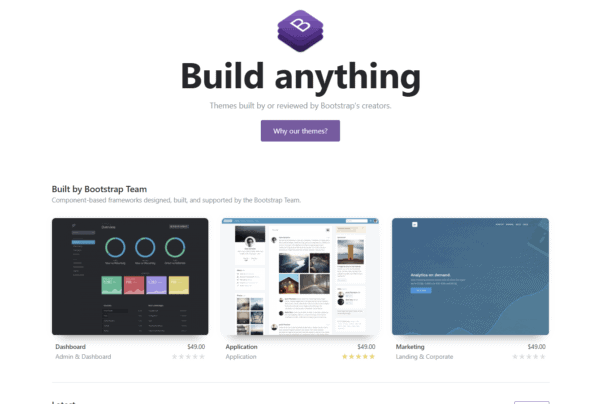
Image credit: Bootstrap
In more complex cases, the app design cost will be higher for clients: custom, built-from-scratch, multi-screen software with complex navigation, platform-specific UX behavior, and robust back-end logic. Assessing all that is critical to determining the time and money required to deliver the app project.
Imagine a feature-rich Uber app with few screens but lots of customization and compare to an enterprise app with minimal design requirements.
Read more on enterprise mobile app development
Each step of the design process must lead to an intuitive and slick UI to keep the user engaged. That takes a lot of back-and-forth and will affect development pricing.
Wireframes, Interfaces, and Testing — oh My!
Our design process starts with a schematic of how a user works with the software — a “user journey”. This is where we get a sense of the scope of the design work (takes 6-9 hours).
Next, we create wireframes for the app based on the user journey: no frills, programmer art instead of design assets. We sketch out where the buttons, fields, text, and navigation will sit.
The wireframing stage takes half the design process: 40-50 hours.
After this scaffolding work we start working on the actual design: consider the color choices, animations, fonts, and the overall style of the app – its brand image.

Prototyping and designing an application take the bulk of the front-end time, around 50 hours each. After the design, we’re looking at 80 to 120 hours of front-end work from start to finish (this cost estimate accounts for a first-pass attempt).
User Testing
When determining the cost to create an app, founders often forget about a prototype, which should always go through a user-testing process (using a service like usabilityhub).
Usually, user testing leads to design revisions and more testing: we rinse and repeat until we get it right (changes in code are more expensive).
Backend systems can be state-of-the-art, but users will leave if the design is a gimmick.
Pro Tip: Iterating on design is 80 percent cheaper than iterating on code; put in the extra time here to maximize ROI. The cost of the prototyping and design phase of app development takes $15,000 to $30,000.
Related: Custom Mobile App Development: The Complete Guide
Design Phase Investment Strategies
Here’s how to invest without gold-plating everything:
-
Over-invest in core journeys, under-invest in the edges. Put your best UX/UI energy into the 2–3 flows tied to revenue or clinical outcomes (onboarding, booking, key task). Low-traffic settings pages can use a clean but generic pattern.
-
Build a small design system early. A minimal set of reusable components (buttons, inputs, cards, typography scale) saves both design and front-end dev hours over the life of the project. You’re not just designing screens; you’re designing a kit.
-
Reuse where users don’t care. Native platform patterns, mature UI kits, or lightly customized design libraries are fine for standard flows (login, profile, list/detail views). Save bespoke visuals for places where you need differentiation.
-
Cap revisions with clear decision-makers. Endless iteration is the silent budget killer. Set explicit limits on design rounds per screen set, and appoint a single product owner who can say “this is good enough for v1.”
-
Prototype to kill bad ideas early. A clickable prototype and a handful of usability tests can save dozens of dev hours later. Any design idea that can’t survive basic user testing probably shouldn’t survive into the backlog.
Phase 3: Development
App development per se impacts the app cost the most. Seasoned developers are still a scarce resource. That’s why coding an app accounts for 50-70 percent of the total costs of app development; and the coding times vary depending on the types of apps; from chatbot app development to building a marketplace app; or a trading and investment app, developing a cryptocurrency exchange, or creating a crypto token.
Considering these factors, it’s clear that the software application development cost is a significant investment, influenced heavily by the specific type of app being developed and the expertise required.
Also Read: How to Build Your Fintech Startup
Built From Scratch Vs. Existing Projects
Whether an application is built from scratch or uses an existing codebase also affects mobile app development costs.
In the end, it all comes down to the fact that existing projects naturally bear the marks of their original creators.

Sometimes code is poorly written; simply not what our devs are used to. It’s common to hear a client saying previous developer did 80 percent of the work when the reality is 30 percent.
What’s more, because an existing project requires a billable discovery phase, it’s imperative to communicate amicably with the outgoing developers. Without documentation or knowledge of existing issues, discovery eats more of the project’s billable hours, increasing the cost to develop an iPhone app.
Backend Code
Whether an application is for scheduling patient appointments or babysitting hours, finding specialized recipes, tracking disease symptoms, or merely displaying a blog, it needs a database for storing product information, a payment processor for handling payments, or a CMS. In other words, unless your app offers very basic features,it must have a backend system.

The most popular SaaS backends provide off-the-shelf solutions that simplify writing parts of an application. Shopify software development kit (SDK) is a typical example: store owners can create iOS and Android apps that use the functionality typical for an ecommerce store: cart, discounts, payments, etc. Such SDKs significantly reduce the iPhone or Android app development cost.
Besides, it’s often the case when another developer has already written tools to solve 75 percent of the problems you need to solve. Open-source software like FuturePress, a javascript library to render Epub files, is, a huge boon for the cost-conscious app developer.
Of course, such packaged components drastically reduce the development time for the core of a mobile/web solution.
Scalability Issues
Simplicity can end up hamstringing app scalability. WordPress, for example, is a fantastic solution for slowly changing sites with mostly static content like blogs. On the other hand, it struggles with dynamic content like an extensive product catalog with searches and filters, serving thousands of customers.
On top of scaling issues, customization of off-the-shelf components can have an even higher overhead for developers than if they wrote it from scratch. Changing another dev’s codebase is not a trivial task.
All in all, development time (and thus average cost of app development) depends largely on the feature-set and the availability and feasibility of open-source software and SaaS platforms.

If you’re building a vanilla offline application, then chances are there are feasible pre-existing solutions, and it’ll be fairly affordable to build.
However, if your business model implies building something completely new and innovative, that’ll cost a pretty penny.
Pro Tip: coding takes 50-70 percent of all app costs. So expect to budget for $35,000-$75,000 for the coding stage of your app development.
Also Read: No code/Low code app development processes
Development Phase Budget Management
Ways to keep the coding phase financially sane:
-
Slice features vertically, not horizontally. Ship thin end-to-end slices (API + UI + basic tests) instead of building the entire backend, then the entire frontend. You’ll catch wrong assumptions earlier and avoid rewriting large chunks of code.
-
Be ruthless about scope per sprint. Every sprint should clearly state what must ship to move a business metric, not just burn hours. If a story can’t be tied to a user or revenue outcome, it probably doesn’t belong in the current cycle.
-
Use “custom” only where it pays off. Admin panels, reporting, and internal dashboards often don’t need full custom builds. Off-the-shelf tools or low-code back-office apps can absorb a lot of non-differentiating functionality.
-
Standardize your stack. A narrow, battle-tested stack (e.g., React/React Native + one backend framework + a known cloud provider) keeps hiring, debugging, and maintenance costs down. Exotic tech choices tend to show up later as expensive edge cases.
-
Track cost per feature, not just per sprint. Tag stories with feature/epic labels and review their total hours regularly. When you see a “simple” feature quietly pass the 80–100 hour mark, you can still decide to cut or simplify before the sunk-cost fallacy kicks in.
Think of development as controlled spend against a roadmap of bets — the discipline is saying “no” or “not now” often enough to keep the app shippable.
Phase 4: QA Testing
A product riddled with bugs or an outdated application that becomes obsolete upon a new operating system release is a big no-no. This brings us to a vital, often overlooked step in the app development process: quality assurance.
QA (aka “testing”), is carried out at Topflight in a twofold manner:
- Unit Testing
- System Testing
Unit testing deals with each new component added to software individually. And system testing deals with overall performance and usability.

We do unit testing as we build the app, using peer-to-peer coding. System testing starts when the app’s development is complete.
Overall, QA assures both the client and us that the application functions as intended. Just remember that the Android or iPhone app development cost will depend on the number of tests. We always include regression tests to test against previously fixed issues.
Software updates, operating system upgrades, and hardware improvements mean that smartphone apps must adapt to a changing technological landscape. Therefore, the cost to build an application will always depend on required QA activities.
Pro Tip: QA usually takes around 15-20 percent of the total app price tag, in the range of $8,000-$18,000.
Testing Phase Cost Control
Testing doesn’t have to mean “test everything forever.” It has to mean “test the right things, systematically.” Cost-control levers in QA:
-
Shift testing as far left as possible. Developers writing unit tests and basic integration tests as they go is cheaper than discovering issues only in full-system QA. QA should be validating behavior, not acting as a bug net for missing basics.
-
Automate the golden paths first. Start with automated tests around the revenue- or safety-critical flows (signup, checkout, clinical entry, etc.). You get maximum payback for each test case and reduce the manual regression load.
-
Right-size your device matrix. You don’t need to test every build on every obscure device. Define a core matrix (e.g., top OS versions and a handful of popular devices) and expand only when analytics show meaningful usage on outliers.
-
Timebox exploratory testing. Free-form exploration is valuable but can expand infinitely. Allocate explicit windows for exploratory QA around new features, then move findings into structured test cases or backlog items.
-
Bundle non-critical fixes. Not every cosmetic bug deserves an immediate hotfix. Group low-priority issues into periodic maintenance releases so you’re not paying full overhead for each tiny patch.
Phase 5: Deployment
Fortunately, this stage takes only a fraction of time compared to other phases of making an app. That’s why it’s often overlooked in the roadmap.
At Topflight, we take care of Apple’s and/or Google’s verification process and that the back end has been transferred to a tested production environment.
Pro Tip: allow for up to $1,800 of your app-building cost for the deployment step.
Deployment and Launch Expenses
Deployment is short, but it’s not free — especially if you want a launch that doesn’t take down your backend or get blocked by an app store rule you forgot existed.
Typical cost drivers and how to tame them:
-
App store and release engineering. Account for the work to set up CI/CD, build pipelines, signing certificates, profiles, and separate staging/production environments. Automating this once is cheaper than hand-rolling every release.
-
Compliance and policy checks. If you’re handling payments, health data, or content, you’ll need extra review time to make sure you’re not violating App Store / Play Store policies or regulatory basics. It’s cheaper to catch this pre-submission than to fight a rejection.
-
Launch assets and tracking. Screenshots, promo copy, privacy labels, and basic analytics/attribution wiring all cost time. Reuse brand assets from your marketing site where possible and define a minimal viable analytics setup for v1.
-
Soft launch vs big bang. A staggered rollout (limited geo or invite-only) lets you validate stability and performance before you push traffic. It’s a small upfront cost in planning that often saves you from emergency firefighting.
-
Feature flags and rollback paths. Implementing basic toggles for risky features and a clear rollback plan keeps “launch issues” from turning into week-long incidents. That’s budget you’d rather spend on roadmap work than production disasters.
Treat deployment as the last mile of engineering, not an afterthought — a clean launch is itself a cost-saving measure.
App Maintenance Costs
Most apps have back ends on cloud service providers like AWS, Google Cloud, or Azure, which can cost pennies or thousands of dollars each month. In addition, integrated third-party services (payment systems) use a SaaS model, requiring subscription costs.
With rising popularity, the app’s throughput needs to grow, racking up app maintenance costs. Indeed, when considering ‘How much does app cost to develop?’, one must also factor in these variable maintenance costs that can significantly impact the total investment over time.
Besides, bugs are bound to crop up and need addressing continually.
Pro Tip: We typically estimate the cost for ongoing maintenance around 25 percent of the original development cost for per year.
Maintenance Cost Planning
Most teams remember to budget for “maintenance” and then treat it like a black box. You’ll get better control if you treat it as a structured, recurring investment instead of an afterthought.
A practical way to plan:
-
Start with a percentage, then break it down. As mentioned above, budgeting around 25% of the initial build per year is a good baseline. Split that into rough buckets: run costs (cloud + SaaS), stability (bug fixes, OS/SDK updates, security), and roadmap (small enhancements).
-
Tie maintenance to SLAs, not vibes. Decide what uptime, response time, and bug-fix windows you actually need. A healthcare app with clinical workflows will justify a higher maintenance line item than a simple consumer utility.
-
Schedule maintenance windows, don’t react to them. Plan quarterly “care and feeding” cycles for dependency updates, security patches, database tuning, and performance work. Planned changes are cheaper than emergency upgrades when something breaks.
-
Be explicit about vendor and SDK exposure. Make a list of critical third-party services (auth, messaging, payments, analytics) and their pricing tiers. When any of them is close to a usage threshold, you want to know before the next invoice.
-
Protect a small innovation budget. If every dollar goes to keeping the lights on, the product stagnates. Reserve a slice of the maintenance budget for incremental UX improvements, A/B tests, and removing old complexity that slows you down.
Good maintenance planning doesn’t just keep the app running; it keeps the cost of owning the app predictable as you scale.
App Development Cost Depending on Type of App You’re Building
Summary table: App Development Cost by App Type
| App Type | Estimated Cost | Description |
|---|---|---|
| Native | $100k – $250k+ | Built separately for iOS and Android using Swift, Kotlin, or Java. Best performance and full hardware access. |
| Cross-Platform | $60k – $180k | Single codebase for multiple platforms (e.g., React Native, Flutter). Great balance of speed and cost. |
| Progressive Web App (PWA) | $30k – $80k | Web apps that work like mobile apps. Cost-effective but limited access to device features. |
| Hybrid | $50k – $120k | Web code (HTML/CSS/JS) wrapped in a native shell (e.g., Ionic, Cordova). Faster to build, but lower performance. |
| Web | $25k – $100k | Browser-based applications, not installed via app stores. Ideal for desktop or mobile web usage. |
Native vs. Cross-Platform
Building an app natively, using Swift or Java for iOS and Android (also Kotlin), takes more time. In such a case, the solution consists of two codebases: for iOS and Android; plus another one for other platforms (Windows Mobile, anybody?).
That may make native sound like a non-starter, but native codebases have the potential to be more powerful and access all built-in hardware features. Big companies like Uber use the native tech stacks to craft high-quality mobile experiences.
Read the related article: How to Select a Technology Stack
If no GPS, NFC, or Bluetooth, then a cheaper path is open to you: A cross-platform codebase. Many great products (e.g., mobile solutions by Bloomberg or Walmart) chose that path; get in touch for more examples of apps.

Now, whether to build a cross-platform or native app is a topic far outside the scope of this blog, but one thing to mention is that in exchange for slightly restricted access to advanced hardware features, writing a React Native app tends to take between 25 and 50 percent less time than two native apps.
Cross-platform codebases have limitations, but the decision to forgo a separate native codebase for individual platforms can mean a shippable product in 4-6 months instead of 12. The average cost of mobile app development backed by cross-platform technologies like Flutter or React Native goes down, accordingly.
Choosing between Android and iOS native development, remember that the price of Android application development will be higher than the price to make an app for the iPhone: way more testing and optimizations on Android.
Ultimately, the choice between native and cross-platform approaches will significantly influence the mobile apps cost to build, making this a crucial consideration in your development journey.
Pro Tip: Cross-platform tools like React Native can trim down app development costs up to 50 percent and allow you to go to market 1.5x faster. Even if you launch on a single platform, say the iPhone, dominating the US smartphone market share, a cross-platform tech stack allows you to reach more platforms in the future.
If you want to learn more, check out our post Swift and React Native comparison.
iOS vs. Android Development Costs
When you go native, “two platforms” does not equal “2× the budget,” but it’s also nowhere near “buy one, get one free.”
At a high level, the same feature set on iOS and Android will differ in cost because of:
QA and Device Coverage
Android’s device/OS fragmentation means more combinations to test and more time spent chasing layout bugs on edge-case devices. iOS tends to be cheaper to stabilize because the hardware and OS matrix is narrower, even though the day rate for an iOS dev might be similar.
Platform-Specific Implementation Details
Permissions, navigation patterns, and system integrations (notifications, background services, widgets, etc.) often need to be wired differently per platform. That’s additional development and test time, not just “recompile for Android.”
Design Adaptation
If you care about platform-native UX, you’ll spend extra on adapting components (navigation, tabs, menus, typography) to match iOS vs. Material guidelines instead of forcing a one-size-fits-all UI.
Practically, most teams do one of three things:
- iOS-first: when budget is tight, primary markets are US/EU, and you need a polished v1 quickly, it’s common to ship iOS first and add Android once you see traction.
- Android-first: if your user base skews toward Android-heavy regions or internal/field use cases relying on a specific Android device fleet.
- Parallel native builds: when budget and timelines allow, and you can’t afford to leave half your audience out (e.g., consumer apps with network effects or products where parity is a compliance/contract requirement).
If building and maintaining two native codebases feels heavy for your stage, that’s usually your signal to reconsider cross-platform for v1.
Cross-Platform Cost Savings Analysis
Cross-platform isn’t “half the cost, half the quality” — it’s usually “meaningfully cheaper and faster” if your app fits the pattern (no exotic hardware, mostly standard UI).
|
Dimension |
Two Native Codebases (iOS + Android) |
Cross-Platform (React Native / Flutter) |
|---|---|---|
|
Build cost |
~$100k–$250k+ for both platforms combined |
~$60k–$180k (often 30–50% cheaper overall) |
|
Time-to-market |
~9–12+ months for parity (sequential or semi-parallel builds) |
~4–6 months for both platforms (≈1.5× faster) |
|
Codebase & team |
2 codebases, often 2 partially separate teams |
1 shared codebase, 1 core team |
|
QA footprint |
Separate test cycles per platform, more device coverage on Android |
Shared logic tests + smaller platform-specific surface area |
|
Maintenance effort |
Features built twice; higher long-term dev/QA hours |
Single implementation per feature; lower parity and upgrade cost |
|
When it shines |
Performance-heavy, device-specific, or highly regulated apps |
MVPs, content/transactional apps, multi-platform v1 on a budget |
If your app can live within the usual cross-platform constraints, you’re typically buying 30–50% lower build spend and ~1.5× faster launch for the same feature set, plus a simpler maintenance story over the next few years.
Progressive Web Apps vs. Native
Developing a progressive web app (PWA) is akin to cross-platform app development. Such a PWA will be available on both mobile platforms: iOS and Android. A PWA application is like website emulating a native application by its look and feel – sort of a hybrid app.
This website-app sits on your phone (with an icon, like other apps) and can be accessed even without an internet connection.

PWAs don’t support integration with phone hardware and most recent features in mobile OS versions (like push notifications or GPS).
Since PWAs are built using web technologies, they can save you budget when if you have a web application and need a mobile companion. You can repurpose the web graphical assets adjusting it to the interface of a mobile solution, and connect the UI to the existing back end.
Pro Tip: use PWA to considerably cut your development budget for developing a mobile companion app for a web application. PWA may cost around 30 percent of the native app development budget and never come close to the native iOS app development cost.
PWA Cost-Benefit Comparison
PWAs sit between “plain web app” and “full native,” trading some hardware access and UX fidelity for a much friendlier budget and maintenance curve.
|
Dimension |
PWA (Progressive Web App) |
Native iOS + Android App |
|---|---|---|
|
Initial build cost |
~$30k–$80k for a solid PWA MVP |
~$100k–$250k+ for two native apps with shared backend |
|
Relative cost vs native |
Typically ~30–50% of a comparable native build (single codebase, web stack) |
|
|
Time-to-market |
Faster: one codebase to design, develop, and test; no app store review gate |
Slower: separate iOS/Android builds + store submissions and reviews |
|
Distribution & reach |
Runs in browser, can be “installed” to home screen; indexable by search, no store fees |
Distributed via App Store / Google Play; better store discovery, but 15–30% store fees typical |
|
Maintenance |
One codebase to update; instant rollout to all users |
Separate app updates per platform; users may lag on new versions |
|
Key limitations |
Limited / inconsistent access to push, GPS, sensors, advanced OS features (esp. on iOS) |
Full hardware access, best performance, richer offline and UX capabilities |
In practice, PWAs are easiest to justify when you already have (or plan) a substantial web app and need a budget-friendly mobile companion, not a hardware-heavy flagship experience.
Health Apps Vs. Other Software
When comparing the development costs of health apps to other types of software, it’s essential to understand the unique requirements and considerations that come into play. Here are a few things to keep in mind:
It’s Not About the Cheapest Quote
Choosing the lowest quote isn’t always the best strategy, especially for health apps. Focus on quotes that allow for strategic compromises tailored to your healthcare application. This approach can help you see early results without compromising the app’s core functionality or compliance needs.
Effective Early-Stage Strategies
To manage costs in the initial stages of health app development, consider these tactics:
- Avoid Storing PHI Initially: Postpone HIPAA compliance if possible and store non-sensitive data in the early versions.
- Skip EHR Integration at First: Evaluate whether integrating Electronic Health Records is necessary from the start.
- Platform Vigilance: Determine if your app needs to be developed for both web and mobile, or if starting with one platform suffices.
- Leverage No-Code/Low-Code Solutions: Utilize these platforms to accelerate development and reduce costs.
When High-End Quotes Make Sense
Premium quotes may be justified in scenarios where strategic compromises aren’t viable. This is often true when marketing to large healthcare systems that require full compliance and specific integrations from the outset.
By understanding these key differences and strategies, you can make more informed decisions about the development costs of health apps versus other software, ensuring that your investment aligns with your long-term goals and requirements.
Platform Selection Decision Matrix
At this point you know the menu (native, cross-platform, PWA, web). The real question is: given your constraints, what should you actually pick first?Use this as a rule-of-thumb matrix:
|
Your Situation / Priority |
Lean Toward |
Why It Usually Wins on Cost/Value |
|---|---|---|
|
Very tight budget, need something in-market fast, mostly standard features |
Cross-platform or Web |
One codebase, fastest path to learning; aligns with lower bands in the type-by-cost table. |
|
Existing or planned web app, mobile is a companion (not the main product) |
PWA or Responsive Web |
Reuse web stack + assets; PWA is typically ~30–50% of full native spend for a comparable scope. |
|
Performance-heavy or hardware-centric (BLE, sensors, AR, complex offline, etc.) |
Native (iOS + Android) |
Full hardware access, fewer edge-case limitations than cross-platform/PWA; you’re paying for control. |
|
Need both platforms but can’t afford two full native builds on v1 |
Cross-platform (React Native/Flutter) |
Shared codebase gets you closer to feature parity on iOS + Android with ~30–50% less build effort. |
|
Regulated / health, PHI, or long-term product with complex roadmap |
Native or High-discipline cross-platform |
Compliance, performance, and long runway usually justify higher up-front spend for a cleaner architecture. |
|
Internal tooling, admin dashboards, desktop-first workflows |
Web |
Browser-based UX is cheaper to build and maintain; no app store friction, widest device coverage. |
The practical pattern we see in real projects: start with the cheapest platform that still lets you test your core bets, then “upgrade” to heavier stacks (native, multi-platform) only when the data — not FOMO — says it’s worth the extra six figures.
App Development Cost Estimation By Business Categories
Different business categories significantly impact mobile app development costs and timelines. Here’s a clear breakdown of what you might expect to invest, typical development durations, and illustrative examples of apps within each category.
Basic App Development Cost
• Cost: $30,000 to $50,000
• Duration: 1–3 months
• Examples: Simple informational apps, basic utility apps (calculators, QR scanners), minimalistic productivity apps.
Data-Based Application Development Cost
• Cost: $50,000 to $90,000
• Duration: 2–4 months
• Examples: Fitness trackers, diet apps, sleep monitoring apps, analytics dashboards.
Authentication Application Development Cost
• Cost: $60,000 to $110,000
• Duration: 3–5 months
• Examples: Banking apps, secure healthcare apps, encrypted messaging apps.
Social Media App Development Cost
• Cost: $90,000 to $150,000
• Duration: 4–8 months
• Examples: Instagram-like photo-sharing apps, chat-based community apps, niche social networks.
eCommerce App Development Cost
• Cost: $100,000 to $180,000
• Duration: 5–9 months
• Examples: Shopify-based storefronts, custom-built online stores, retail shopping apps with payment integrations.
On-Demand App Development Cost
• Cost: $120,000 to $200,000
• Duration: 6–10 months
• Examples: Food delivery apps, ride-sharing apps (Uber-like), home services booking platforms.
If you’re specifically trying to understand the cost to build an app like Uber, assume you’re operating at the upper end of this on-demand band: real-time geolocation, multi-sided logistics, ratings, payouts, and fraud prevention all behave like separate mini-projects that push you far beyond a simple “book a ride” prototype.
Marketplace App Development Cost
• Cost: $140,000 to $220,000
• Duration: 7–12 months
• Examples: Airbnb-style rental marketplaces, peer-to-peer marketplaces, freelance service platforms.
IoT & Hardware Application Development Cost
• Cost: Starts from $180,000+
• Duration: 8–14+ months
• Examples: Smart home control apps, wearable healthcare apps, connected car apps, industrial IoT platforms.
Healthcare App Development Costs
• Cost: $150,000 to $300,000+
• Duration: 7–14+ months
• Examples: Telemedicine platforms, chronic care management apps, remote patient monitoring dashboards, EHR-integrated patient portals.
Fintech App Development Costs
• Cost: $150,000 to $320,000+
• Duration: 7–14+ months
• Examples: Digital banking apps, trading/investment platforms, personal finance managers, lending/origination apps with KYC/AML.
Education App Development Costs
• Cost: $80,000 to $180,000
• Duration: 4–9 months
• Examples: E-learning platforms, language learning apps, LMS companions, cohort-based course apps with quizzes and progress tracking.
Gaming App Development Costs
• Cost: $120,000 to $300,000+
• Duration: 6–12+ months
• Examples: Casual mobile games, mid-core strategy or RPG titles, multiplayer party games, gamified learning or fitness apps.
Summary Table: App Development Cost by Category
| Business Category | Cost Estimation | Development Duration | Example Apps |
|---|---|---|---|
| Basic | $30k – $50k | 1–3 months | QR scanners, calculators |
| Data-Based | $50k – $90k | 2–4 months | Fitness apps, diet trackers |
| Authentication | $60k – $110k | 3–5 months | Banking apps, encrypted messaging |
| Social Media | $90k – $150k | 4–8 months | Instagram-like, community platforms |
| eCommerce | $100k – $180k | 5–9 months | Custom retail stores, Shopify apps |
| On-Demand | $120k – $200k | 6–10 months | Uber-like services, food delivery |
| Marketplace | $140k – $220k | 7–12 months | Airbnb-like platforms, freelance markets |
| IoT & Hardware | Starts from $180k+ | 8–14+ months | Smart home, wearables, connected cars |
| Healthcare | $150k – $300k+ | 7–14+ months | Telemedicine, chronic care, EHR portals |
| Fintech | $150k – $320k+ | 7–14+ months | Digital banking, trading, lending apps |
| Education | $80k – $180k | 4–9 months | E-learning platforms, LMS companion apps |
| Gaming | $120k – $300k+ | 6–12+ months | Casual mobile games, mid-core titles |
Of course, business category alone doesn’t tell the whole story—what really pushes costs up or down is the complexity of your app’s features. Let’s unpack what that means in practical terms.
App Development Cost Depending on Complexity of Features
App features aren’t created equal. Some are simple toggles — others are entire systems in disguise. To make sense of it all, it helps to split the typical feature set into basic and advanced capabilities, both of which impact development time and cost differently.
Basic Features
These are often must-haves for most apps and are relatively quick to implement:
• User Login (email/password, Google/Apple login)
• User Profile (editable, optional avatar, preferences)
• Push Notifications (standard alerts via FCM/APNs)
• Basic UI and navigation
• Contact forms
• Static content (About, FAQ)
• Basic analytics integration
Expect these to cost between $1,000 and $6,000 each, depending on depth and complexity.
Basic Feature Cost Calculator
Before you get lost in line items, treat basic features as a quick sanity-check on your budget, not a precise quote.
A simple way to use the ranges in this section and the table below:
1. List only true basic features. Start with the bullets above (login, profile, notifications, analytics, static pages) and cross out anything that smells like a mini-system (marketplace, custom CMS, workflow builder).
2. Assign a complexity tier per feature.
- Low: close to the bottom of the range (simple login, static FAQ).
- Medium: mid-range (social login + profile, basic push).
- High: top of the range (more states, edge cases, custom flows).
3. Rough-sum the basic feature cost. Multiply each feature by a number in its range and add them up — this gives you a floor for UI + backend work around the basics.
4. Compare against your overall budget. If your “basic features only” subtotal is already eating most of your planned spend, you’re not ready for ambitious advanced features yet.
This doesn’t replace a proper estimate, but it will stop you from planning a $200k feature set on a $60k budget.
| Feature | Category | Estimated Cost | Notes |
|---|---|---|---|
| User Login | Basic | $1,000 – $4,000 | Email/password, Google, or Apple login |
| User Profile | Basic | $1,000 – $3,000 | Editable profile, avatar, preferences |
| Push Notifications | Basic | $1,500 – $3,000 | Standard alerts via FCM or APNs |
| Basic Analytics | Basic | $1,000 – $2,000 | Firebase, Google Analytics setup |
| Static Content | Basic | $500 – $1,500 | About, FAQ, Terms pages |
| API Integrations | Advanced | $4,000 – $6,000 per integration | Payment, maps, messaging, etc. |
Advanced Features
These significantly impact your app’s architecture, backend, and QA cycles:
• API Integrations (e.g., Stripe, Twilio, Google Maps)
• Machine Learning & AI
• e-Commerce Systems
• Geolocation with routing/geofencing
• Use of Phone Sensors (e.g., gyroscope, NFC)
• IoT & BLE Device Integrations
• Accessibility Features (compliance with WCAG, ADA, etc.)
| Feature | Category | Estimated Cost | Notes |
|---|---|---|---|
| Machine Learning / AI | Advanced | $20,000 – $50,000+ | CoreML, ML Kit, or custom AI models |
| eCommerce Module | Advanced | $15,000 – $40,000 | Cart, payments, product catalogs |
| Geolocation | Advanced | $4,000 – $10,000 | Map display, routing, geofencing |
| Phone Sensors | Advanced | $2,100 per sensor | Gyroscope, NFC, barometer, etc. |
| IoT Integrations (BLE) | Advanced | From $9,000 | External hardware connectivity |
| Accessibility Compliance | Advanced | $15,000 – $25,000 | WCAG, ADA, Section 508 support |
How Advanced Features Multiply App Development Costs
The more complicated, the more expensive to develop.
A complex app includes third-party integrations, server-side logic, admin side, or the use of mobile hardware like BLE. Account for developer time and subscription costs of third-party services.
Databases, machine learning libraries, front-end frameworks, etc. Each layer of new technology adds to the project cost and depends on the type of solution – whether you’re building a marketplace app, or a stock trading and investing platform, a medical app that uses blockchain, or creating a crypto token, developing an apple watch app.

Decisions about tech and features are hard to overestimate. Create a list of all required features and mark only 2-3 options to lower the initial cost to get an app developed.
Advanced Feature ROI Analysis
Advanced features are mini-products. The only sane way to greenlight them is to ask: what hard number does this move, and by how much? A simple checklist:
-
Name the metric first. For an ML recommender in e-commerce, that might be conversion rate or average order value. For BLE/IoT integrations, it’s often time saved per user or reduced support/ops load.
-
Compare cost vs. annual impact. If an AI module costs $30k–$50k to ship and maintain, what uplift (e.g., +5% in revenue or −20% in support tickets) would pay it back within 12–18 months? Anything slower is a “nice-to-have,” not a v1 feature.
-
Quantify operational savings. A BLE integration that saves nurses 5 minutes per patient at scale can easily beat a flashy but low-impact UX upgrade. Put a dollar figure on those minutes.
-
Set a kill-switch. If early data doesn’t show movement on the target metric, be ready to cut the feature from future investment instead of doubling down out of sunk-cost guilt.
API Integrations
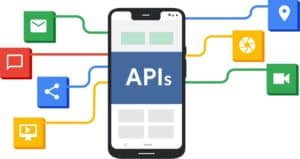
Your mobile application must work with external service providers. App coders use API calls to add payment gateways, messaging platforms, geolocation, social networks, etc.
Pro Tip: while integrating an app with on-device system features like FaceID or Apple Auth is considered a low-cost investment (under $1,000 each), making your app work with third-party services (e.g., social media) via APIs may cost $4,000-6,000 per integration.
Machine Learning
ML and AI become mainstream. Apps rely on ML algorithms to personalize content and do so much more based on an individual user profile. However, coding ML-powered features increases the overall costs of developing an app and takes months to develop.
Pro Tip: Ask your app developers if using Core ML (iOS) and ML Kit (Android) makes sense because on-device ML can reduce the app cost.

Related: Machine Learning App Development: The Complete Guide
e-Commerce
If you want a mobile shopping experience, we advise a ready-made e-commerce platform like Shopify, BigCommerce, Magento, WooCommerce, and other SaaS platforms and white-labeled mobile e-commerce experiences.
This off-the-shelf software approach is a legit shortcut to push down the mobile app development price of a commerce app.
Geolocation
The cost of integrating with a geolocation service varies: it’s one thing to show a map, and quite another with routes, traffic, geofencing, etc.
Related: Location App Development: Steps, Tools and Best Practices
Pro Tip: Use “native” mapping SDKs on each mobile platform — Apple Maps or Google maps — to keep the cost of making an app down. This approach typically raises the app making price by $4,000 or so.
Phone sensors
Modern phones’ sensors enable advanced features:
- Proximity sensor
- Accelerometer
- Gyroscope
- Compass
- Barometer
- NFC
Apple and Google provide APIs to work with this hardware. The cost to build a mobile app increases if we need to tap into the phone’s hardware (except GPS because it’s easy to access via third-party’s SDK).
Pro Tip: the cost of developing a mobile app that works with phone sensors should be around $2,100 per sensor.
IoT Integrations
Apart from built-in sensors, apps may have to source data from external devices such as pedometers or heart rate sensors. To enable this connectivity, developers need to work with a Bluetooth Low Energy protocol (BLE).
Pro Tip: Expect the best price per external device integration to end up around $9,000 (simple, low-code scenario).
Startups need careful budgeting cost analysis to launch a new app with a cost-effective strategy because the cost involved in developing a typical app vs. custom app development costs can differ as day and night.
Related Article: How to Develop an IoT App
Accessibility Options
Unfortunately, many businesses ignore accessibility options: by not adjusting software for customers with seeing or hearing issues.
A few standards to comply with:
- WCAG 2.1
- ADA Title III
- Section 508
- IS 5568
- EAA/EN 301548
Typically, business owners invest in accessibility only if their product caters to a niche demo. Still, winning software titles are always implementing accessibility features. There are many ready-made web and mobile technologies and code templates for making apps more accessible to all users.
The cost of applying accessibility best practices to mobile and web development should not be overlooked.
Feature Prioritization Framework
When money is finite (it always is), your backlog is not a wish list — it’s a portfolio of bets. This is a simple way to decide what actually makes it into the build.
1. Score Every Feature on Three Axes
Give each feature (basic and advanced) a 1–5 score for:
-
Impact – How directly does it move revenue, activation, retention, or compliance?
-
1 = “nice-to-have cosmetic”, 5 = “no product without this.”
-
-
Effort/Cost – Use the ranges in the tables:
- Basic items at the low end of the ranges → 1–2,
- Heavier basics / lighter advanced → 3,
- High-ticket advanced features (ML, complex e-commerce, BLE) → 4–5.
-
Risk/Unknowns – New tech, unclear UX, external dependencies, regulatory uncertainty:
-
1 = proven pattern, 5 = we’ve never done this and neither have our users.
-
2. Calculate a Simple Priority Score
For a quick gut-check, use: Priority = Impact / (Effort + Risk)
Sort features by this number. High-priority items are those where impact is large and the combined cost + risk isn’t.
3. Decide What Goes Into V1
- Always first: high-impact, low–medium effort basic features that score well.
- Carefully: pick one or two advanced features with outstanding scores (core to your value prop).
- Later: low-impact basics and high-risk advanced ideas become backlog, experiments, or v2.
This keeps v1 focused on a small set of high-leverage features instead of a bloated mix of “cool but hard” ideas.
MVP Feature Selection Guide
For MVP, your question isn’t “what would be nice to have?” — it’s “what’s the smallest feature set that can prove we’re not wasting our time?”
Using the prioritization framework:
- Start with only high-priority basic features (top-scoring Impact / (Effort + Risk) from the tables).
- Add one, max two advanced features that are absolutely core to your value prop or hypothesis.
- Everything else becomes post-MVP backlog, not “phase 1.5.”
If you can’t explain what a feature is supposed to prove, it doesn’t belong in v1.
Cost of Adding GenAI (LLMs) to Your App
Adding AI-powered features to your application isn’t just a technical decision—it’s a financial one that will shape your operating expenses for years to come. The cost structure splits into two distinct categories: the upfront human capital investment for setup, and the ongoing operational costs that scale (or don’t) with usage.
Setup Costs: Building the Foundation
Before a single token flows through your app, you’ll need specialized talent and infrastructure. Unlike traditional software modules, LLM features require what’s often called an “AI Infrastructure Pod”—engineers who understand the nuances of probabilistic systems, prompt design, and data retrieval.
Labor costs for AI/ML specialists (2026 rates):
| Experience Level | North America | Western Europe | Eastern Europe | India/SE Asia |
|---|---|---|---|---|
| Junior (0-2 yrs) | $50-80/hr | $45-75/hr | $40-65/hr | $20-45/hr |
| Mid-level (2-5 yrs) | $80-140/hr | $70-120/hr | $60-100/hr | $40-80/hr |
| Senior (5+ yrs) | $140-250/hr | $120-180/hr | $100-160/hr | $80-130/hr |
Note: Total hiring overhead typically adds 1.4x to 2.5x to base rates once benefits, tools, and recruiting fees are included.
For organizations building internal self-hosting capabilities, a minimal team typically includes 1.5 FTEs for AI/ML infrastructure, 1.0 FTE for DevOps/SRE, plus shared security resources—pushing annual staffing costs to $720,000 – $1,650,000 for a fully-loaded team.
The Core Setup Work
Prompt Engineering: This has evolved beyond simple instruction-writing into “Schema-First Development,” where prompts are constructed around strict data models (using tools like Pydantic or Zod) to ensure reliable, structured outputs. Budget 40-80 hours for initial development, plus ongoing iteration.
RAG Pipeline Setup: If your app needs to answer questions about your data, you’ll need a Retrieval-Augmented Generation pipeline. This is typically the most labor-intensive component—building ingestion jobs that parse various document types (PDFs, Markdown, scanned images) and implementing semantic chunking strategies. Without proper RAG tuning, hallucination rates can hit 40% of responses.
Vector Database: The cost here scales with your data volume:
- Small deployments (<1M vectors): Self-hosted options like Chroma or Qdrant cost $0-50/month
- Larger deployments (10M+ vectors): Managed services like Pinecone run $70-500/month
Evaluation & Safety: You’ll need automated testing harnesses to catch hallucinations and safety issues. Leading organizations still manually review 15-20% of interactions for high-stakes B2B applications. Safety/guardrails layers (NeMo Guardrails, Guardrails AI) add additional implementation time for PII filtering, toxicity detection, and prompt injection protection.
Ongoing Inference Costs: The Trap
Here’s where things get interesting—and where many teams get burned. The choice between API-based and self-hosted inference creates fundamentally different cost structures.
Option A: “API Wrapper” Costs (Pay-Per-Token)
Using managed APIs from OpenAI, Anthropic, or Google means you pay only for what you use. At low volumes, this is incredibly cheap.
Current API Pricing (per 1M tokens, January 2026):
| Provider/Model | Input | Output | Cached Input | Best For |
|---|---|---|---|---|
| OpenAI GPT-5 | $1.25 | $10.00 | $0.125 | Balanced performance |
| OpenAI GPT-5 Mini | $0.25 | $2.00 | $0.025 | High-volume tasks |
| OpenAI GPT-5 Nano | $0.05 | $0.40 | $0.005 | Classification, summarization |
| Claude Sonnet 4.5 | $3.00 | $15.00 | $0.30 | Documentation, analysis |
| Claude Haiku 4.5 | $1.00 | $5.00 | $0.10 | Speed/classification |
| Gemini 3 Flash | $0.50 | $3.00 | $0.05 | Multimodal, high-throughput |
| Gemini 2.5 Flash-Lite | $0.10 | $0.40 | $0.01 | Budget multimodal |
For a low-usage pilot (1,500 sessions/month with ~3,000 tokens per session), managed APIs cost roughly $0.01 per session or about $15/month total.
Option B: Self-Hosted/Fine-Tuned Model Costs (The Trap)
The moment you move to self-hosting—whether for data privacy, fine-tuning, or guaranteed throughput—you switch from variable to fixed costs. The GPU is billed 24/7 whether it processes tokens or not.
Self-Hosting Cost Reality (Llama 3.1 models):
| Model | Deployment | Monthly Infra Cost | Throughput |
|---|---|---|---|
| Llama 3.1 8B (8-bit) | Single GCP L4 | $775-820 | ~9 req/sec |
| Llama 3.1 8B (8-bit) | HA (2 nodes) | $1,540-1,650 | ~18 req/sec |
| Llama 3.1 70B (4-bit) | Single A100 | $1,320-1,380 | ~2.6 req/sec |
| Llama 3.1 70B (4-bit) | HA (2 nodes) | $5,450-5,600 | ~5 req/sec |
Costs include compute, load balancer, storage, and observability. Does not include staffing.
The Math That Exposes the Trap:
At that same 1,500 sessions/month pilot scale:
- Managed API (GPT-4o): ~$0.01 per session
- Self-hosted (Llama 8B): ~$0.52 per session
That’s a 50x price difference. The GPU runs 730 hours per month but actively processes tokens for less than 3 hours total. You’re paying for idle capacity.
When Self-Hosting Makes Sense
The economics flip at scale. At 60,000 sessions/month:
- Managed API (GPT-4o): ~$2.25 per session ($135,000/month)
- Self-hosted (Llama 8B HA): ~$0.027 per session ($1,620/month)
The break-even point against proprietary APIs typically occurs around 18.75 billion tokens per year—roughly 150,000-200,000 moderate-complexity sessions per month.
But there’s a catch: if your use case requires the reasoning quality of frontier models (GPT-4o, Claude Sonnet), an 8B open-weight model may not cut it. And if you use a smaller managed API like GPT-4o Mini ($0.15/session), it often remains more cost-effective than self-hosting while eliminating infrastructure overhead entirely.
The Hidden “Trap” of Dedicated Capacity
The most frequent source of budget overruns happens when teams move from pay-per-token to dedicated capacity—either because they’re fine-tuning on proprietary data or need guaranteed throughput SLOs.
AWS Bedrock Custom Model Units: ~$4.71/hour or $3,438/month per unit (two units for HA = $6,876/month minimum, even with zero requests)
Azure Provisioned Throughput: Minimum 15 PTUs for GPT-4o at ~$1/PTU/hour = $10,800/month baseline
The SLO Sizing Trap: If a single A100 handles 20 concurrent users but your peak concurrency is 50, you need 3 nodes. During the 14 hours per day when concurrency drops to 5, those extra nodes are still billed—pushing effective utilization below 15%.
Quick Reference: API vs. Self-Hosted
| Factor | Managed API | Self-Hosted |
|---|---|---|
| Cost at low volume | ✅ Pennies per session | ❌ $500-5,000+/month minimum |
| Cost at high volume | ❌ Scales linearly | ✅ Amortized fixed cost |
| Setup complexity | ✅ API key + SDK | ❌ GPU provisioning, MLOps, monitoring |
| Data privacy | ⚠️ Data leaves your infra | ✅ Full control |
| Fine-tuning | ⚠️ Limited options | ✅ Full flexibility |
| Staffing needs | ✅ Minimal | ❌ Requires dedicated MLOps/SRE |
| Break-even point | — | ~18B+ tokens/year |
Recommendations
- Start with managed APIs. Unless you have regulatory requirements forcing self-hosting, begin with pay-per-token APIs. The cost at low volume is negligible, and you avoid infrastructure complexity.
- Use the smallest model that works. GPT-5 Nano or Gemini Flash-Lite at $0.05-0.10/1M input tokens handles many classification and summarization tasks. Don’t pay frontier model prices for commodity work.
- Implement caching aggressively. Prompt caching can reduce API costs by 90% for repeated context. Semantic caching can cut total API calls by 60-85% for high-repetition workloads like customer support.
- Model your break-even point before self-hosting. Calculate your actual token volume and compare total costs including staffing, monitoring, and HA requirements—not just GPU hours.
- Watch out for the “fine-tuning trigger.” The moment someone says “we need to fine-tune,” your cost structure fundamentally changes. Ensure the quality improvement justifies the 10-100x infrastructure cost increase.
App Development Costs by Region
App development hourly rates vary widely by region, so “where is it cheapest?” is usually the wrong first question. The practical question is: what’s the best blend of cost, time zone, and expertise for your stage—especially if you’re building something complex, regulated, or high-risk products where rework turns “cheap” into “expensive.”
One important nuance: there isn’t one “correct” price per region. Your development pricing changes a lot based on engagement model (freelance vs staff augmentation vs boutique agencies), and that variance is often bigger than the regional difference itself.
Below are typical ranges split into two bands: a lower “marketplace/dev shop/staff aug” range and a higher “senior / regulated team” range (where you’re paying for stronger PM/QA/architecture coverage and reliable execution).
|
Region |
Typical marketplace / dev shop / staff aug |
Senior / regulated team (boutique / mid-market) |
Best For |
Notes |
|---|---|---|---|---|
|
North America (US/Canada) |
$100–$180/hr |
$150–$250/hr |
primary market, regulated healthcare builds |
NA has the highest … hourly rates; the premium often buys decision speed and tighter alignment with US healthcare and regulatory realities |
|
Western Europe (UK, DACH, Nordics, etc.) |
$65–$170/hr |
$120–$250/hr |
EU-heavy teams, high engineering standards |
Western Europe is fragmented by country; boutique/mid-market consultancy work often overlaps the $120–$250 band |
|
Eastern Europe |
$45–$90/hr |
$60–$100/hr |
Best cost-to-quality ratio for many product teams |
Senior specialists + tech leads climb higher; value is often lower TCO due to fewer coordination gaps |
|
Latin America |
$35–$70/hr |
$50–$90/hr |
nearshore, fast iteration with US teams |
The time-zone overlap advantage is the real product, not just savings; senior bands vary a lot by country |
|
Asia (India, Southeast Asia) |
$25–$60/hr |
$40–$80/hr |
Scale, well-bounded execution work |
Best when the work is well-bounded, clearly specified work streams; senior/lead rates vary sharply by specialization |
North American Development Costs (North America (US/Canada))
North America typically has the highest development hourly rates, but that premium usually buys you decision speed, deep domain expertise, and tighter alignment with US healthcare and regulatory realities. Best fit when you’re building complex, regulated, or high-risk products and you need strong product, UX, and architecture leadership from day one. Smart play: Anchor your core leadership (product, UX, tech lead) here so your product/architecture spine doesn’t drift—even if delivery pods later come from elsewhere.
European Development Pricing (Western Europe + Eastern Europe)
Europe splits into two practical bands: Western Europe with pricing not far off North America, and Eastern Europe with a stronger cost-to-quality ratio. Western Europe shines for teams that value strong UX and engineering; Eastern Europe often wins on total cost because you get mature engineering without paying top-of-market rates—especially when you already have clear direction and need reliable execution.
Latin American Options (Latin America)
Latin America often plays the nearshore role for US-based founders: mid-range rates, overlapping working hours, and generally good communication. It’s strongest for feature delivery pods plugged into a US/EU product/architecture spine, plus QA/DevOps and incremental feature work that benefits from time-zone overlap. It’s weaker when you’re doing Early-stage discovery, regulatory strategy, and messy stakeholder alignment—those usually anchor better in your primary market.
Asian Development Markets (Asia (India, Southeast Asia))
Many Asian markets offer some of the most competitive app development hourly rates, but they work best when your scope is well-bounded, clearly specified work streams and leadership is not outsourced. Works particularly well when you have detailed requirements and a strong internal product owner. Risk to watch: vague requirements or absent product leadership can turn headline savings into rework—or a partial rebuild a year later.
Remote Team Cost Benefits
The biggest savings rarely come from picking a single cheapest region, but from combining regions deliberately. A common effective mix: North American or Western European leadership (product, UX, architecture), Eastern Europe or Latin America as the primary delivery engine, and Asian teams for well-bounded work streams. Done well, this blended model lowers your effective hourly rates while actually upgrading the quality of decisions, instead of trading quality for savings.
App Development Cost Depending on the Team
App developers naturally affect the mobile app development cost estimate. And not just the software engineering talent. Successful apps ask for expert teams with versatile capabilities, adjusting to market conditions on the fly.
Wondering where all that app budget actually goes? Here’s a breakdown of typical team roles and their cost impact based on the scope of your app — from lean MVPs to full-blown enterprise builds.
| Team Role or Function | Lean Build (Simple App) | Full Feature Set (Medium App) | Enterprise-Grade (Complex App) |
|---|---|---|---|
| Timeline (Est.) | 2–5 months | 5–8 months | 8–14+ months |
| Lead Engineer / Dev Team | $25,000 – $40,000 | $50,000 – $70,000 | $100,000+ |
| Product Designer (UI/UX) | $3,500 – $6,000 | $6,000 – $9,000 | $12,000 – $16,000 |
| Technical PM | $4,000 – $6,000 | $8,000 – $14,000 | $12,000+ |
| QA / Test Automation | $7,000 – $10,000 | $14,000 – $20,000 | $20,000 – $25,000 |
| Product Strategist / BA | $2,500 – $4,000 | $5,000 – $8,000 | $9,000 – $11,000 |
| DevOps / Cloud Setup | $2,500 – $4,000 | $5,000 – $8,000 | $10,000+ |
| Solution Architect | $2,000 – $3,000 | $6,000 – $9,000 | $10,000 – $15,000 |
| Total Investment (Est.) | $20,000 – $55,000 | $55,000 – $110,000 | $120,000+ |
Outsourcing vs. In-house Team
IIt’s more expensive to hire a full-stack in-house team than outsource app development to an app development agency: the cost of recruiting plus the cost of knowledge transfer — something that doesn’t influence the costs of making an app when outsourcing.

There are many other roadblocks to hiring your own team, especially if you’re interested in maintaining a decent time to market:
IT Administering
Depending on the scale of a project, you will need an IT management unit: someone taking care of network, security, servers, and other IT required for an optimal development process.
CTO and Project Managers
Developers and designers need to be coordinated; their interaction with other company units should be streamlined and transparent. So hire a CTO and project managers for that, and look out for these expenses or manage everybody by yourself.
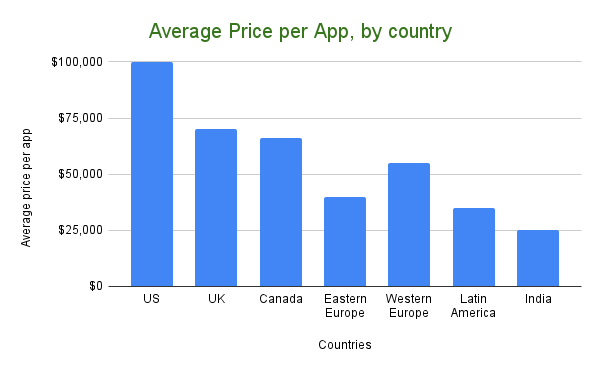
Equipment and Office Space
Developers quickly become hopeless without a comfy office, their computers, servers, monitors, and other high-end devices that host code.
Workload Balance
Throughout the development process you often don’t have enough tasks to justify a full-time position, but without it, your project is not going to happen. Juggling workload between dev team members adds unnecessary complexity.
Company Culture
Developers operate at their best in companies that foster team spirit and promote company values.
Benefits, Paid Leave, etc.
And remember about “extra” costs associated with having your own team like 401 matching, taxes, etc.
Outsourcing a project simplifies things: your outsourcing partner will be responsible for that, while remaining accountable for the timely delivery and adherence to the agreed upon budget. However, remember to choose the right app developer wisely with the outsourcing option.
Agencies from India may offer a lower cost per hour for mobile phone app development, but lack professional developers. That skews the delivery timeframes and messes up your marketing efforts.
Therefore, if you need your product in the App Store and Google Play on time and on budget, opt for a near-shore option. Even though the median price range to create a basic app in some countries (e.g., in Eastern Europe) is about $10K, many small business owners have to rebuild their iPhone and iPad apps because they fell prey to a low hourly cost.
Eventually, their average price ended up higher, if not twice more expensive than the original low cost that got them on the hook.
Pro Tip: An average annual after-tax cost per developer in the US is around $100,000. That may be the overall cost of building your entire product, which will use more resources than a single developer and ship much sooner. The cost to have an app developed greatly depends on whether you can outsource and on the average hourly rate.
Freelancer vs. Agency Cost Comparison
You’re not just choosing a rate; you’re choosing how much of a team you’re willing to assemble and manage yourself.
|
Dimension |
Freelancer |
Agency / Product Studio |
|---|---|---|
|
Typical rate structure |
Hourly / day rate per person |
Blended rate across roles |
|
Included roles |
1–2 (dev, maybe designer) |
Dev, design, PM, QA, architecture as needed |
|
Coordination & oversight |
You (or your PM) |
Agency PM / tech lead |
|
Bus factor / continuity |
High risk if one person disappears |
Lower risk; multiple people know the codebase |
|
Best suited for |
Small spikes, prototypes, narrow features |
Multi-feature v1s, complex or time-sensitive work |
When a freelancer makes sense:
- You have a very small, well-defined task (e.g., a single integration, UX polish).
- You already have strong internal product and engineering leadership to manage them.
When an agency is cheaper in total:
- You need multiple skills at once (design + backend + mobile + QA).
- You care about time-to-market and long-term maintainability, not just shipping something at the lowest hourly number.
The math many founders miss: a “cheaper” freelancer stack you have to coordinate yourself often ends up costing more than a focused, cross-functional agency pod.
Offshore vs. Onshore Development Costs
You’re not just choosing a geography; you’re choosing how much you want to trade lower hourly rates for coordination risk and rework.
Use “onshore / near-shore / offshore” as a lens on the regional rate bands you saw earlier.
|
Model |
Typical Regions |
Blended Rate Signal |
Where It Wins |
Main Risks |
|---|---|---|---|---|
|
Onshore |
US/Canada, Western Europe |
Highest (top of the ranges) |
Complex products, regulated domains, tight deadlines |
Highest burn rate; you still need a strong team |
|
Near-shore |
Eastern Europe, LATAM |
Mid-range (roughly half to two-thirds onshore) |
Best balance of cost, quality, and overlap |
Vendor quality varies; still needs strong product lead |
|
Offshore |
India, parts of SE Asia and beyond |
Lowest (bottom of the ranges) |
Cost-sensitive, well-specified work, strong internal PM |
Higher odds of misalignment and rebuilds |
How to decide:
-
If time-to-market and quality are existential, keep product/architecture onshore and treat offshore as a tactical lever, not the core of the team.
-
If budget is absolutely capped, start offshore/near-shore — but plan for a real QA + code review layer or a future rebuild baked into your model.
Hybrid Team Cost Models
Most real products aren’t “all San Francisco” or “all offshore” — they’re hybrids. You keep decision-making and architecture close, and distribute implementation and QA where it’s cost-effective.
A practical way to think about hybrid models:
-
Onshore product spine, near-shore/offshore delivery
-
Onshore: Product owner, UX, tech lead/architect
-
Near-shore/offshore: 2–5 engineers + QA
-
You get onshore context and decision speed, with a blended rate closer to a near-shore team than a pure US squad.
-
Embedded specialists + remote pod
-
Onshore: 1 senior engineer/architect embedded with your team
-
Near-shore/offshore: dedicated feature team (backend, mobile/web, QA)
-
The architect enforces standards and code quality so you don’t pay the classic “cheap now, rebuild later” tax.
-
Follow-the-sun for scale-ups
-
Onshore: product, design, key leads
-
Mixed regions: multiple pods handling different modules/time zones
-
Overkill for early-stage, but powerful once you have a validated product and heavy roadmap.
Cost-wise, hybrid teams often land 20–40% cheaper than pure onshore while avoiding the coordination tax of fully unmanaged offshore teams. The key is not the country list — it’s having one clear owner for product decisions and technical direction, regardless of where the rest of the team sits.
Team Size Optimization
The question isn’t “how many people can I afford?” — it’s “what’s the smallest cross-functional squad that can actually ship this thing?”
Use your scope and the existing team-role table as anchors:
-
Simple MVPs: 1 product owner, part-time designer, 1–2 full-stack/mobile devs, and part-time QA is usually enough. If you need a dedicated architect, you’re probably over-engineering v1.
-
Growing products: Move toward a 4–6 person squad (PM, designer, 2–3 devs, QA). Beyond ~6 people, coordination overhead starts eating the speed gains unless the work is cleanly parallel.
When (and how) to add people:
-
Add one role at a time to relieve a visible bottleneck (QA drowning, UX backlog, backend blocking mobile), not because “we have budget.”
-
Keep a close eye on utilization: if multiple people are consistently under 60–70% loaded, your team is too big for the current roadmap.
And a simple rule of thumb: if adding another developer creates more meetings than shipped features, you’ve passed the optimal team size.
Hidden App Development Costs
Besides design and development services, several things directly affect сosts of app development but nevertheless slip through the cracks, especially when getting a quote from a rookie. Does your app development price include these critical items?

Back-end Development
Remember that there is more than a shiny front end: back end code with the business logic and back-end data storage. You may also need a web admin app for managing content/users.
SaaS and SDK Fees
Companies often use plug-in SaaS services to ship products faster (Chargebee for a subscription or Google Maps for location). A pro app development partner will inform you if these tools require a monthly subscription and help approximate the cost based on a customer base.
Server Hosting
Account for the hosting costs when budgeting your app so that app’s code can run in the cloud. Get an approximate cost estimation from a few providers.
Project Management
Whether you work on a software application in-house or outsource it to a mobile app development company, projet management is a must. Development companies don’t include your managerial effort in their estimate cost, but you should.
App Marketing
You must allocate resources to marketing (app store optimization or affiliate partnerships) before you get your product published in the app stores.
Also Read: Topflight’s growth story: 1400% increase in traffic
The “Compliance Tax” in Healthcare App Development
If your product creates, receives, stores, or transmits PHI, compliance isn’t a checkbox you tick at the end — it’s a parallel security workstream that runs alongside design and development. And it comes with real costs.
This is also why a “$5k healthcare app” quote is usually a red flag. Either the scope quietly avoids PHI… or someone is skipping the work that hospitals and serious buyers will eventually demand.
Here’s what that compliance budget typically consists of:
|
Compliance workstream |
Typical budget range |
How often it shows up |
Why it exists |
|---|---|---|---|
|
HIPAA Security Risk Analysis (SRA) |
$1,000–$10,000 (small org) / $20,000–$50,000+ (enterprise) |
Typically annual |
Required foundation: inventory, threats, vulnerabilities, and a mitigation plan. |
|
Penetration testing (web / API) |
$5,000–$30,000 (web) / $6,000–$30,000 (API) |
Typically annual |
Tests real-world exploit paths, especially auth + RBAC + data exposure. |
|
Mobile pentest (per OS) |
$7,000–$35,000 (per OS) |
Typically annual |
Mobile brings its own fun: local storage, traffic interception, binary analysis. |
|
Cloud environment testing / review |
$10,000–$50,000+ |
Typically annual (or major changes) |
IAM, storage exposure, infra-as-code, cross-tenant risk. |
|
Vulnerability scanning (managed) |
$800–$4,500/year |
Typically quarterly/continuous |
“Hygiene” checks (CVEs/config issues). Not the same thing as a pentest. |
|
Remediation & gap closure |
$1,000–$10,000+ (often internal labor) |
As needed |
Fixing what scanning/pentests find (usually the biggest “hidden” piece). |
|
HIPAA policy package |
$1,000–$5,000 |
Usually one-time, then updated |
Admin safeguards: incident response, DR, access procedures, etc. |
|
Annual staff HIPAA training |
$30–$100 per user/year |
Annual |
Because “we trained everyone once in 2022” is not a compliance program. |
|
Vendor due diligence (per vendor) |
$200–$3,500 per vendor |
Per vendor / periodic |
Reviewing vendors that may touch PHI (security questionnaires, artifacts, risk tiering). |
|
Legal review of BAAs (per vendor) |
$320–$1,250 per vendor |
Per vendor |
Negotiation and liability terms for PHI-handling vendors. |
|
Compliance automation / GRC tooling |
$8,000–$12,000/year (example range) |
Recurring |
Helps avoid the once-a-year panic sprint of evidence collection. |
The 3-Stage Reality Check
…so you don’t overpay too early — or underpay until it hurts.
A practical way to budget is to match compliance spend to your stage:
- Stage 1 (MVP / pilot): $5k–$25k — focus on HIPAA basics (BAAs where needed, encryption, basic SRA, minimal policies).
- Stage 2 (v1 / growth): $40k–$100k — start adding “market credibility” artifacts (stronger testing, automation, first audit steps).
- Stage 3 (enterprise / hospitals): $150k–$350k+ — external attestations and the operational overhead that comes with them.
The Compliance Cost Nobody Budgets for
If you sell to hospitals, one of the nastiest hidden costs is the vendor security questionnaire: 300–500 questions, lots of back-and-forth, and a real opportunity cost in senior engineering + legal time. Teams often burn roughly $20,000–$150,000 worth of internal effort if handled manually.
Optimizing App Development Costs
Seasoned app developers have a few tricks up their sleeve to kick down the cost to develop an app. Follow these best practices guard your app budget.
Research Product-market Fit
Know the target audience for your app type (ideal customer persona): their real needs, context for using the app throughout a day, etc. Is social networking their primary use case?
Create a Prototype
Verify your findings by creating a prototype of the app to keep the app cost structure under control (clickable prototype updates based on user feedback are less expensive than code changes). Otherwise, the price of building your mobile software may increase drastically.
Streamline Project Management with Agile
Once you lock in the final list of app features and the app’s look and feel, it’s time to build the actual app. It is at that point that your app-making budget will start to melt quite noticeably.
To ensure that every dollar of the budget contributes to the bottom line, you need to set up a project management framework. We practice and recommend Agile with weekly sprints because it helps balance the development progress with spending.
The benefits of the agile software development approach come down to:
Transparency
At any moment during development, our partners know precisely how each team member allocates their working hours, allowing to project budgets for future sprints.
Flexibility
No software follows specs to the letter. Programs adjust as we start releasing or testing early versions. Fortunately, agile favors flexibility, allowing the dev team to augment features, cut knickknacks, etc.: we get a product to start generating traction right after the release.
Also Read: AR App Development Guide
Quicker Time to Market
Agile’s retrospective and early adopters’ feedback imply that we get to launch faster. No need to elaborate every minute detail in requirements up front – every iteration focuses on ROI goals.
Lean Budget
Working with an agile team is like hiring a full-stack department of cross-discipline specialists (in design, testing, development, DevOps, etc.) and not having to keep everybody on full-time payroll.
Also Read: DevOps Implementation Plan: Everything You Need to Know
Every expert gets involved proportionally to the value they bring to the table. In addition, business owners avoid costly mistakes spending hundreds of hours on useless development.
And the budget adjusts according to your team’s velocity, depending on how many experts are allocated to your project per month and the number of hours they put into your product.
Stick to the Scope
To retain the original estimated app development budget, stick to the feature set from the prototyping stage. Put off add-ons and new options until later stages of development when you can assess if you have the bandwidth.
Hopefully, you’ve got enough info now to answer, “How much does it cost to build an app?” So, the final cost won’t come as a complete surprise.
Pre-Development Cost Savings
Most of your savings potential lives before anyone opens an IDE. Think of pre-development as a filter that catches expensive mistakes early.
Tactical levers:
-
Start with a ruthless problem brief. One page: problem, target user, key jobs-to-be-done, and 1–2 success metrics. Anything that doesn’t serve that brief is a “later” idea by default.
-
Do cheap validation first. Customer interviews, click-through Figma prototypes, and very rough pricing models are far cheaper than writing and rewriting production code. Use the prototype to kill weak ideas, not just to polish strong ones.
-
Constrain the tech stack on paper. Decide up front where you’ll lean on SaaS/SDKs (auth, payments, messaging) vs. custom builds. Pre-selecting “pre-made” blocks caps scope before devs start inventing bespoke solutions.
-
Pre-negotiate scope and guardrails with your vendor. Agree on what a “v1” is not: no surprise platforms, no stealth advanced features, no last-minute redesigns. That alignment alone can save tens of hours later.
Everything you do here makes the later sections—Agile, prototyping, and scope discipline—actually pay off.
Development Phase Optimization
Once the team is sprinting, optimization is less about “working harder” and more about shaping the work so it burns budget cleanly.
Practical ways to do that:
-
Enforce small, vertical slices. Each story should deliver a user-visible sliver (UI + backend + tests). Big technical “layers” with no user impact are where budgets disappear.
-
Limit work in progress. Too many open tickets means nothing finishes, context switching explodes, and QA becomes a traffic jam. Fewer concurrent items = more finished value per sprint.
-
Use a strict Definition of Ready / Done. No vague tickets; each story has acceptance criteria, test expectations, and UX assets attached. “Done” includes merged, tested, and deployed to staging, not “works on my laptop.”
-
Standardize tools and patterns. One frontend stack, one backend style, shared components. Every deviation from the norm should earn its existence with a real business reason.
-
Track cost per epic. Roll hours and spend up by feature area, not just by sprint. When one epic starts to dwarf the rest, you can consciously de-scope or park it instead of quietly doubling the budget.
Post-Launch Cost Reduction
After launch, the goal shifts from “ship” to “stabilize and prune.” A few months of disciplined cleanup can shave a lot off your ongoing burn.
Focus on:
-
Turning off what no one uses. Use analytics to find dead or low-usage features and either hide, deprecate, or merge them. Every active feature has a maintenance tax.
-
Right-sizing environments and tooling. Scale cloud resources to real usage, not launch-day paranoia. Consolidate overlapping SaaS tools (analytics, support, feature flags) once you know which ones you actually lean on.
-
Deflecting support to product. Add in-app FAQs, guided tours, and smarter error states so your team spends less time manually explaining the same flows.
-
Stabilization sprints. Run a couple of post-launch sprints focused purely on bug clusters, performance hotspots, and UX friction—no new features. Fixing these early saves you from fire drills later.
The aim is a lean, stable baseline that costs less to run and is safer to build new features on.
Long-term Budget Management
If pre-development is about avoiding dumb spend and post-launch is about trimming fat, long-term management is about making sure the app’s finances age well.
A simple playbook:
-
Plan budgets in 12–18 month arcs. Split expected spend into three buckets: “run the app” (hosting, SaaS, maintenance), “grow the app” (new features, experiments), and “keep it healthy” (refactors, security, tech debt).
-
Re-forecast quarterly using real data. Compare planned vs. actual spend per phase and per epic. Use that to adjust future scope instead of pretending the original spreadsheet was prophecy.
-
Tie major spend to milestones. Bigger investments (new platform, significant AI module, full redesign) should be unlocked by hard milestones: revenue, retention, clinical adoption, or funding events—not vibes.
-
Schedule renewal moments. Every 2–3 years, assume you’ll need at least partial re-architecture or UX modernization. Planning for that explicitly is cheaper than waking up to a stack no one wants to touch.
Long-term, the “cheapest” apps are the ones whose budgets are boring and predictable—not the ones that were built for the lowest initial quote.
App Development Financial Planning Guide
This section pulls the whole blog into a simple money model: how you fund, justify, and de-risk the budget bands you’ve been seeing so far.
Funding Options for App Development
Before you argue whether your app is a $90k or $180k build, decide where that money actually comes from. Different funding paths tolerate very different risk profiles:
-
Bootstrapping / internal budget. Best for $30k–$100k scoped MVPs where you can validate quickly and keep control. Pairs nicely with the lower complexity ranges in this guide.
-
Friends & family / angels. Works when you have a clear story to a v1 and early traction but need more runway than personal savings can cover. Use the ranges here to anchor a realistic “use of funds” plan.
-
Early-stage VC / accelerators. Makes sense only if the market and upside justify larger, multi-phase roadmaps (e.g., regulated healthcare, fintech, marketplaces). Here, your app budget is a slice of a broader GTM plan.
-
Strategic partners / customers. Design partners, hospitals, or enterprises co-funding development in exchange for discounts, exclusivity, or roadmap influence. Slower to set up but can de-risk both funding and distribution.
-
Non-dilutive options. Grants, loans, or revenue-based financing where you trade future cash, not equity. Best when you already see a path to revenue and want less dilution.
Pick the funding mix before scoping features too aggressively; it’s much easier to shrink a roadmap than to retrofit a realistic funding source to an overgrown one.
ROI Calculation Framework
“Is this app worth it?” needs a clearer answer than “we think users will love it.” Use a simple ROI lens on top of the cost ranges in this guide and the value discussion in Cost vs. Value Analysis and Advanced Feature ROI Analysis.
A pragmatic approach:
-
Estimate annual upside. From your v1 scope, estimate either:
-
Extra revenue (e.g., new subscriptions, higher LTV), or
-
Cost savings (e.g., fewer support tickets, reduced manual work).
-
-
Compute payback period.
-
Payback (months) ≈ Total build cost / (monthly net benefit).
-
If you’re spending $150k and realistically expect $15k/month in extra margin after ramp-up, you’re looking at ~10 months to break even.
-
-
Sanity-check against runway. If the payback period is longer than your financial runway or patience, either:
-
Cut scope,
-
Raise more money, or
-
Revisit whether this is the right product bet.
-
Use this framework to compare competing app ideas as well, not just to justify the one you’re already in love with.
Break-even Analysis
Break-even is just ROI turned sideways: how many paying users (or transactions) do we need before this build stops being a pure cost?
A minimal process:
-
Pick your unit of value. For SaaS, that’s usually monthly subscription margin; for marketplaces, it’s take-rate per transaction; for internal tools, it’s hours saved per month converted to dollars.
-
Set a target horizon. Many startups aim to recover initial build cost within 12–24 months of launch.
-
Solve for users or volume.
-
Break-even users ≈ Total build cost / (monthly margin per user × months to target).
-
If you spend $120k, want payback in 18 months, and net $10/month per user, you need roughly 667 active paying users.
-
You don’t need precision; you need to know whether your break-even math lives in the realm of “hundreds,” “thousands,” or “hundreds of thousands” of users — and whether your go-to-market plan can plausibly deliver that.
Investment Risk Assessment
Not all $150k app bets are equal. Some are “high odds, modest upside”; others are “moonshot or bust.” Read the cost bands in this guide through four risk lenses:
-
Technical risk. New tech stack, heavy AI/ML, IoT, many integrations, or performance constraints. High technical risk → stay lean on v1 scope and favor proven components over greenfield invention.
-
Market risk. Unproven demand, no pilots, no waitlist, or unclear pricing. When market risk is high, spend should skew toward smaller MVPs and validation rather than big-bang builds.
-
Regulatory/operational risk. PHI, fintech, or workflows where failure has legal or safety consequences. Here, skimping on budget often just shifts cost into compliance fixes and firefighting.
-
Funding/runway risk. If the app budget is more than 30–40% of your total available runway, you don’t have much room for iteration. You’re betting the company on one product cycle.
Score each dimension (low/medium/high). If you’re stacking “high” across multiple categories, your safest move is a tighter MVP in the lower cost bands, even if your long-term vision is much bigger.
Budget Contingency Planning
You already saw the advice in Budget Planning Best Practices to add 10–20% on top of your ideal number. Treat that buffer as safety rails, not extra features.
A few rules of thumb:
-
Reserve contingency primarily for refactors, infra changes, and integration surprises, not “while we’re here” feature creep.
-
Release contingency gradually as you clear risk: after discovery, after first user tests, after launch.
-
If you burn through the buffer early, force a re-scope conversation instead of quietly expanding the budget.
Contingency isn’t a slush fund; it’s the price of dealing with unknowns without blowing up trust between founders, stakeholders, and the dev team.
App Development Cost Calculators
You may have come across various app development cost calculators online, promising to give you an accurate estimate of your app development costs. But, let’s face it – the intricate complexities involved in application development make these tools far from reliable.
Why?
- Firstly: They can’t possibly take into account all the variables that affect the cost of developing an app. From the number and complexity of features, design intricacies, to backend infrastructure and post-launch support, there are countless factors at play.
- Secondly: As an aspiring app founder, you may not have all the necessary information at hand to feed into such calculators accurately. The need for expert consultation becomes inevitable.
Manual Cost Estimation Methods
If calculators are too blunt, build a quick manual estimate with numbers you actually control:
-
Anchor to phases. Reuse the ranges from this guide (discovery, design, development, QA, deployment, maintenance) and decide whether your project will sit at the low, mid, or high end for each.
-
Layer in feature complexity. Use the basic/advanced feature tables: count how many items you have in each bucket and sanity-check whether your planned budget can realistically cover that mix.
-
Apply a blended rate. Multiply estimated hours (or cost bands) by a realistic blended hourly rate for your team model (onshore, near-shore, hybrid).
-
Add a contingency. Top everything up by 10–20% for scope drift and unknowns. If you can’t afford that buffer, your “base” number is already too optimistic.
The goal isn’t perfect precision; it’s catching obviously impossible plans before you start calling vendors.
Cost Comparison Templates
Instead of comparing quotes email-by-email, normalize everything into a single comparison sheet:
One row per phase/epic: discovery, design, development, QA, deployment, maintenance.
- One column per scenario: e.g., “Agency A (cross-platform MVP),” “Agency B (two native apps),” “Internal team,” “De-scoped MVP.”
- Track both cost and assumptions: hours per phase, team composition, platform choice, key integrations.
Two simple checks:
- Does any quote show unrealistically low hours for development vs. your feature set?
- How much of the budget is going into non-negotiables (security, QA, infra) vs. nice-to-haves?
This turns “who’s cheapest?” into “which scenario makes the most sense for what we’re trying to prove?”
Budget Tracking Tools
Your estimate is only useful if you track reality against it:
-
Start with a spreadsheet. Mirror the same phases/features you used for estimation and add columns for “planned vs. actual” hours/costs.
-
Connect to your delivery tools. Pull time logs from whatever you’re using (Jira, Linear, ClickUp, Harvest, etc.) into the same sheet so you can see which epics are drifting.
-
Review weekly, not post-mortem. A simple weekly check-in — “which features are blowing past their band, and why?” — lets you de-scope or simplify while it still matters.
Over time, that sheet becomes your internal cost database for future projects.
Financial Modeling Resources
A cost estimate without a simple financial model is just a scary number.
At minimum, pair your app budget with a lightweight model that includes:
-
Acquisition and activation: expected traffic, conversion to signups, conversion to paying/retained users.
-
Revenue per active user: subscription price, take rate, or average order value.
-
Runway and payback: how many months of runway your current funding buys at the planned burn, and what level of usage would pay back the initial build within a sensible window.
You don’t need Wall Street-grade modeling — a handful of linked assumptions in a spreadsheet is enough to see whether your app budget fits your business reality.
We’ve had our fair share of experience with cost calculators. We found that only the simplest app projects adhered to their estimated budgets. Most projects deviated from the calculated costs due to market-driven pivots or the adoption of agile methodologies that allow for continuous improvement and adaptation. In essence, while calculators may provide a basic starting point, they fall short of capturing the dynamic nature of software development.
Future of App Development Costs 2025–2027
Over the next few years, app budgets won’t magically collapse; instead, how you spend will shift: more automation in build/QA, more spend on AI features and integrations, and more pressure to justify every dollar with ROI.
AI Impact on Development Costs
AI coding and testing tools will keep per-feature implementation cost drifting down, especially for boilerplate work and regression tests.
In practice, that saving is often reabsorbed by expanded scope: stakeholders ask for more platforms, richer analytics, and AI-powered features for roughly the same budget.
Expect the biggest gains in maintenance and refactors (faster upgrades, migrations, test coverage), while complex, regulated, or ML-heavy work still commands senior rates and careful architecture.
No-Code/Low-Code Cost Implications
No-code/low-code will increasingly absorb internal tools, admin panels, and simple workflows, cutting initial build costs for that slice by a large margin.
For external, user-facing products, these tools mostly move cost from “raw development” to architecture, integration, and governance: someone still has to:
- design data models
- secure PHI/PII
- wire in real APIs
Smart teams will use no-code/low-code for experiments and back-office, while keeping core product logic in a maintainable codebase.
Market Rate Predictions
Global average rates are likely to stay soft to flat in many regions as competition and AI tooling increase, but top 10–20% talent (strong product + engineering + domain skills) will remain expensive.
The onshore vs near-shore vs offshore price gaps should persist, with more teams normalizing on hybrid models:
- onshore product/architecture
- near-shore delivery pods
Overall project budgets will be driven less by “hourly rate” and more by how disciplined the team is with scope and risk.
Technology Cost Evolution
Infrastructure will keep getting cheaper at small/medium scale (serverless, managed databases, monitoring), making early-stage run costs less of a budget bogeyman.
The new cost centers are AI APIs, data platforms, and third-party SaaS: usage-based pricing can quietly dominate long-term spend if you don’t watch it.
Tech stacks with fewer vendors and clear exit paths (owning core code, portable data) will age better financially than stacks that lean heavily on proprietary “black box” services.
How Much Does it Cost to Build Your App With Topflight?
So, are you wondering how much it would cost to build your app with Topflight Apps? Well, while we always strive to deliver the best quality at a reasonable cost, it’s important to note that the complexity of your app can significantly impact the final price.
For a basic MVP, you’re looking at costs in the ballpark of $70,000 to $150,000. However, if you’re aiming for a more sophisticated solution, integrating cutting-edge components like cloud services, EHR or IoT integrations, or even ML/AI technology, the cost could rise up to $200,000 or more. We also work on prototypes for promising products that sometimes start at $40,000-50,000.
Small Business App Examples
For small businesses, we’ve shipped focused apps like Goodskin’s med spa treatment planner and JOOVV’s BLE-connected light therapy companion, where the phone controls pro-grade devices used at home and by teams like the San Francisco 49ers, JOOVV’s official light therapy partner.
These projects sit in the lower-to-middle MVP bands you quote earlier—serious builds, but tightly scoped around one hero workflow.
Enterprise App Case Studies
Walker Tracker grew from a step-challenge app into a full corporate wellness platform, then was acquired by Terryberry in April 2022 and folded into their global engagement suite.
On the clinical side, GaleAI—a medical coding automation platform we built with complex Athena EHR integration—identified a 7.9% undercoding rate in a one-month retrospective audit and an estimated $1.14M in yearly lost revenue, at a cost of less than 1% of the recovered revenue.
That’s the pattern for enterprise work: higher upfront cost, but explicitly aimed at outcomes like acquisition, global rollouts, and multi-year, revenue-expanding contracts.
Startup Success Stories
SoberBuddy is an evidence-based virtual recovery coach chatbot we rebuilt from a fragile prototype into a commercial app with 100,000+ downloads and strong subscription/retention metrics.
This is the startup sweet spot: one well-executed v1 that proves engagement and monetization, then justifies further product and fundraising rounds.
Cost vs. Outcome Analysis
-
AlgoRX: medication storefront built on our stack → 12× ROI, $1M+ in sales by month 2, 7-figure ARR within ~6 months.
-
Dedica Health: RPM platform for a cardiology group → 1,100+ patients monitored daily, $300,000 ARR SaaS deal, >80% of patients hitting CPT targets.
In both cases, the dev spend looks small next to the recurring revenue and defensible workflows those apps now run.
Why Topflight Is the Cost-Smart Partner for App Development
Most “budget overruns” aren’t a mystery—they’re the hours lost reinventing basics. Topflight tackles cost head-on by breaking every estimate into design, technical build, and maintenance buckets—the same three drivers highlighted earlier in this guide—so nothing hides in the fine print.
That discipline shows up in the numbers:
- Allheartz MVP in 800 hours / 6 months—computer-vision rehab that cut in-person visits 50% and clerical work 80%.
- RTHM MVP in ≈1,400 hours—a no-code/low-code Long-COVID platform that shipped faster by re-using ready-made modules.
- GaleAI MVP in 1,100 hours—AI medical-coding SaaS now lifting provider revenue up to 15%.
Those speed-to-market wins helped founders across our portfolio raise $188 M+ in follow-on funding, proving investors like the cost curve too.
What keeps the budget on track
- Cross-platform codebases – React & React Native cut build spend 40–50% versus separate native teams.
- Reusable HIPAA-ready modules – Auth, chat, EHR hooks, and analytics snap in instead of soaking sprints.
- Agile, sprint-size planning – Two-week sprints with burn-down metrics flag scope creep before it eats cash.
- Compliance baked in – HIPAA, SOC 2, PKCE from day one—no late-stage surprise.
Need to Know More about App Costs?
There you have it, the breakdown of app development costs. The price of your app will end up between US $80,000 and $150,000, with 25 percent of the initial app development budget going towards yearly app maintenance cost.
We’re app developers in NYC, LA, Miami, and our experienced team is here to help you. We’ll answer the most common questions about the costs of developing an app in the FAQs below, but do feel free to reach out if you have any inquiries about the cost to make an app. Our app development team will share insights to help you set up your app for success, on time, and on budget.
Related Articles:
- How much does app design cost
- Healthcare App Development Cost Breakdown
- How long does it take to develop an app
- Telemedicine App Development Cost
- Cost of AI in Healthcare
- Cost of EHR Implementation
[This blog was originally published in July 2017. It has been updated for more recent information.]
Frequently Asked Questions
How much does mobile app development cost?
The average app costs US $80,000 to $150,000 to develop (medium complexity).
How much does it cost to maintain a mobile app?
25 percent of the total app development cost per year.
How long does it take to build an app?
Depending on the team composition, it may take from three to six months.
Is cross-platform app development really less expensive than building apps natively?
Yes, if your app fits the best-case scenario for cross-platform development, you can spend considerably less than if you were to build two standalone native apps.
What are shortcuts to optimizing my app development budget?
An expert app developer, familiar with the mobile tech landscape, will suggest ready-made solutions and SDKs to speed up development and save the budget.
How much does it cost to make an app if I use Flutter or React Native?
Save up to 25% – 35% of the budget to make an app by using Flutter or React Native vs. developing natively.